

USDA trade mission tests landmark Indonesia deal as US exporters eye US$67B food market


Key takeaways
- US-Indonesia trade deal eliminates import licensing and quota barriers, opening access to a US$67 billion packaged food market.
- USDA delegation of 41 agri-businesses arrives in Jakarta to test new market access for dairy, wheat, soybeans, and feed ingredients.
- The expansion of Halal certification by October 2026 poses implementation challenges for US exporters.

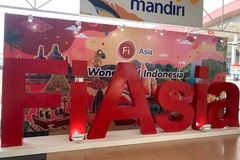
US dairy, wheat, and grain exporters are set to benefit from the elimination of tariffs and licensing barriers that have long complicated access to Southeast Asia’s largest economy — Indonesia — as a US trade delegation composed of 41 agri-businesses, trade organizations, and representatives from four state departments of agriculture, arrives in Jakarta this week.
The US-Indonesia Agreement on Reciprocal Trade, announced in July 2025 and recently signed, exempts US food and agricultural products from two major regulatory barriers: Indonesia’s commodity balance policy, which capped imports at government-estimated shortfalls in domestic supply, and its import licensing regimes, which required pre-shipment inspections, ministry approvals, and facility-by-facility certification before US products could enter the market.
Indonesia will recognize US regulatory oversight for meat, dairy, and poultry facilities, accept USDA and FDA certificates — eliminating the plant-by-plant approval process — and grant permanent Fresh Food of Plant Origin designation for US plant products.
“This agreement opens the door to billions in new exports — including soybeans, wheat, and other key commodities — while eliminating tariffs and cutting red tape that have long held back US producers,” says Mike Seyfert, president and CEO of the National Grain and Feed Association.
The USDA trade mission, running February 2–5, offers the first real test of whether those provisions translate into sales. With 282 million consumers, a US$4.1 trillion GDP, and 5% annual growth — and the Brookings Institution projecting 76 million Indonesians will join the consumer class by 2030 — Indonesia represents significant untapped potential. Yet the US captured just 10% of its agricultural import market in 2024, trailing behind Brazil, China, and Australia.
“While Indonesia was our 11th largest market in 2024, the opportunities here in the world’s fourth most populous nation cannot be overstated,” says Under Secretary for Trade and Foreign Agricultural Affairs Luke Lindberg, who is leading the delegation.
Indonesia’s food processing industry imports 65% of its raw materials, according to the USDA, with the Indonesian Food and Beverage Industry Association reporting that manufacturers source 80% of milk ingredients, 70% of soybeans, and 100% of wheat from abroad. That import dependency creates structural demand for US suppliers — particularly as the packaged food market expands from US$43 billion in 2024 to a projected US$67 billion by 2029, according to Euromonitor.
Dairy sees “largest improvement in over a decade”
US dairy exports to Indonesia reached US$247 million in 2024, but US suppliers remain the fourth-largest source behind New Zealand, the EU, and Australia in a market importing US$1.8 billion annually. The deal’s elimination of facility registration requirements could shift that balance.
“This represents the largest improvement of access US dairy exporters have seen in the region in over a decade and will be a timely step towards keeping US dairy exporters globally competitive,” says Becky Rasdall Vargas, senior VP of trade and workforce policy at the International Dairy Foods Association (IDFA).
“Getting rid of the facility registration requirement will be huge as it has blocked significant quantities of facilities being able to access the market, and many more from even trying. Between the loosened import restrictions, eliminated tariffs, and Indonesia’s strong demand for dairy nutrition in school programs and beyond, the opportunities are really endless — from consumer-ready nutrition to ingredients for further processing to foodservice cheeses used in tourist locations,” she tells Food Ingredients First.
Indonesia’s dairy production falls short of national demand, with imports dominated by milk and cream, whey, butter, and cheese. Rising prosperity in metropolitan regions is driving demand for premium imported products, according to USDA analysis.Indonesia’s 282 million consumers represent the world’s fourth-largest packaged food market.
Wheat commitment locked in
The wheat sector secured concrete purchase commitments ahead of the broader trade deal. Indonesian flour mills association APTINDO signed a memorandum of understanding in July 2025, committing to purchase at least one million metric tons of US wheat annually from 2026 through 2030 — double the recent five-year average of 500,000 metric tons.
“The commitment of the Indonesian milling industry to purchase US wheat reflects this increased focus by the Indonesian government to improve the trade balance with the US,” says Mike Spier, president and CEO of US Wheat Associates.
Indonesian wheat demand is being driven by bakeries, biscuit manufacturers, and a growing food processing sector. The country imports 12–13 million metric tons annually, producing none domestically, making it typically the world’s second-largest wheat importer after Egypt.
US wheat exports to Indonesia totaled US$198 million in 2024, facing competition primarily from Australia. The deal also resolved phytosanitary barriers related to fumigation and traceability requirements that had complicated shipments.
Soybeans: Protecting a dominant position
Unlike dairy and wheat, US soybeans already command an 89% share of the Indonesian market — US$1.24 billion in exports in 2024, making Indonesia the fourth-largest destination globally for American soybeans.
The crop is essential for Indonesian food production: soybeans are the primary ingredient in tofu and tempeh, staple protein sources across the archipelago.
“We appreciate President Trump and his administration’s efforts in maintaining market access for US soybeans into Indonesia, and the commitment from USTR to address non-tariff barriers in that market,” says Caleb Ragland, president of the American Soybean Association.
However, regulatory uncertainty around biotechnology could complicate market access. The vast majority of US soybeans are genetically engineered (GE) varieties, and while Indonesia is one of 32 countries cultivating GE crops, approval processes remain costly and inconsistent, according to USDA’s Foreign Agricultural Service. Overall, US soybean and other GE product exports to Indonesia totaled US$1.75 billion in 2024.
Grains and feed ingredients
Indonesia did not import US corn in 2024, but trade resumed in early 2025, with US$56 million in shipments between January and July. USDA projects the trade deal will increase the US market share for both corn and wheat in the 2025/26 marketing year.
The country’s poultry sector is driving demand for feed ingredients. Feed grains, soybean meal, and feeds and fodders account for nearly 30% of Indonesia’s total agricultural imports, creating opportunities for US suppliers as domestic sourcing faces transportation bottlenecks.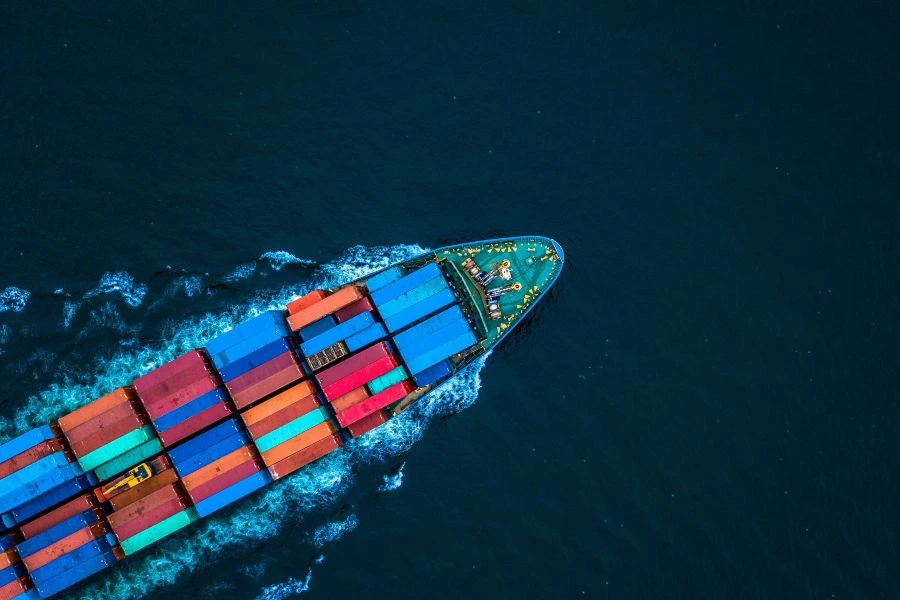 US dairy is the fourth-largest supplier to Indonesia’s US$1.8B import market.
Implementation questions remain
Despite the opportunities, persistent challenges are looming over the agreement’s implementation: Indonesia is expanding mandatory halal certification requirements to most F&B products by October 17, 2026.
Meat and dairy already require certification, but the expansion will affect a far broader range of imports. USDA advises exporters to assess whether certification is feasible and cost-effective for their specific products.
“The devil is always in the details with halal measures. Dairy is, for the most part, naturally halal, so obtaining certification when necessary is not usually a problem. If Indonesia is going to create restrictive halal labeling schemes, fail to accredit internationally recognized certifiers, or other such barriers, we’ll need to go back to negotiations to make sure their halal implementation doesn’t undercut the recent deal announcement,” IDFA’s Vargas tells us.
“One of the challenges of the Indonesian market is a high degree of regulatory uncertainty, with authorities frequently adding new requirements that create trade barriers,” notes USDA’s Foreign Agricultural Service in its latest exporter guidance.
The path to finalizing the trade agreement illustrated these uncertainties. In December, US officials accused Indonesia of “backsliding” on commitments to remove non-tariff barriers, with Treasury Secretary Scott Bessent publicly describing Jakarta as “a little recalcitrant” on implementation.
Those issues were resolved in late December ahead of the January signing — but the episode underscored the gap between framework agreements and on-the-ground access.
Broader trade push
The Indonesia mission is part of USDA’s 2026 trade promotion strategy. Upcoming missions will target the Philippines, Türkiye, Australia, Saudi Arabia, and Vietnam. Trade missions in 2025 to Hong Kong, Thailand, Peru, Guatemala, the Dominican Republic, and Mexico generated projected 12-month sales of US$125 million for more than 200 US companies.
Indonesia's young population — over half are millennials or Gen Z, according to Statistics Indonesia’s 2020 census — is driving demand for innovative and convenient food products. With more than 41,000 modern grocery stores nationwide and e-commerce food sales growing rapidly, opportunities extend well beyond bulk commodities.
Whether this week’s business-to-business meetings translate into actual sales will offer the first indication of whether the landmark trade deal delivers on its promise — or whether regulatory hurdles continue to restrain US export opportunities in South East Asia’s largest economy.