


Urban agriculture: A strategic solution to future-proof Europe’s vegetable supply


Key takeaways
- A study estimates that urban agriculture in Europe could help enhance food security and sustainability in the region.
- Researchers suggest using underutilized urban spaces for vegetable production to reduce reliance on long-distance food transport.
- Policy support is important for encouraging urban food production, with consumers and local governments playing a key role in promoting sustainable food systems.
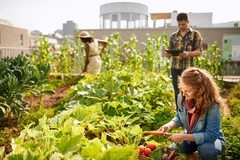
Urban agriculture could produce up to 28% (20 million metric tons) of vegetables annually, potentially fulfilling nearly one-third of Europe’s current vegetable production, scientists in the Netherlands and Germany estimate. The research highlights the untapped potential of urban agriculture in European cities and its potential to contribute significantly to food security, sustainability, and resilience.
The European Commission describes urban agriculture as a “complementary way to strengthen food systems in the near future,” as it does not compete but helps conventional agriculture address challenges such as climate change, water scarcity, and the food supply chain during pandemics. The method involves cultivating, processing, and distributing food in and around urban areas.
The study was conducted by the Leibniz Institute of Ecological Urban and Regional Development, Germany (IOER), and the University of Groningen, Netherlands.
Author Prajal Pradhan, associate professor at the University of Groningen, says urban agriculture could support more resilient urban food systems, as cities face mounting pressures posed by a growing population, climate change, and food supply disruptions.
“Food companies could source parts of their supply from urban-produced food. Moreover, local governments could encourage citizens to produce food in the surrounding area,” he tells Food Ingredients First.
“We can learn from the energy transition in the regard where every household can be a food prosumer — a producer and a consumer of food at the same time.”
Tapping urban agriculture potential
The study, published in Sustainable Cities and Society, analyzed the potential of urban agriculture for 840 cities across 30 European countries, including Mislata (Spain), Paris (France), and Duisburg (Germany).
 Prajal Pradhan: Food companies could source from urban-produced food, as it offers a promising approach to addressing food insecurity and enhancing urban sustainability.The teams used a Geographic Information Systems-based analytical approach to evaluate how underutilized spaces, such as rooftops, residential gardens, green areas, and vacant urban land, could be converted into productive vegetable-growing areas.
“Doing so could supply 28% of vegetable demand for 190 million Europeans,” says lead author Stepan Svintsov from the IOER.
The researchers evaluated how “low-tech, open-air, and soil-based” urban vegetable production in European cities can help the F&B industry meet local food demand and contribute to sustainability goals.
“We estimate that 4551–7586 km of urban land could be allocated to vegetable cultivation, yielding 11.8–19.8 million tons annually, equivalent to roughly one-third of the reported vegetable production in the analyzed countries,” reads the study.
The authors also point to the importance of integrating agriculture into urban planning, emphasizing that it could help EU cities improve local food accessibility, reduce food transport, strengthen community engagement, and promote healthier diets.
“With thoughtful planning and policy support, rooftops, green spaces, and unused urban land could become vital components of Europe’s future food infrastructure,” says co-author Diego Rybski from the IOER.
Previous research has shown that urban agriculture could contribute 5–10% of global vegetable production.
Supporting local food systems
The study focuses on how underutilized urban land, such as rooftops and vacant spaces, can be used without high-tech solutions like hydroponics or vertical farming.
For F&B manufacturers, this means urban agriculture could provide a consistent, sustainable, and regionally grown supply of ingredients, reducing the reliance on long-distance food transport.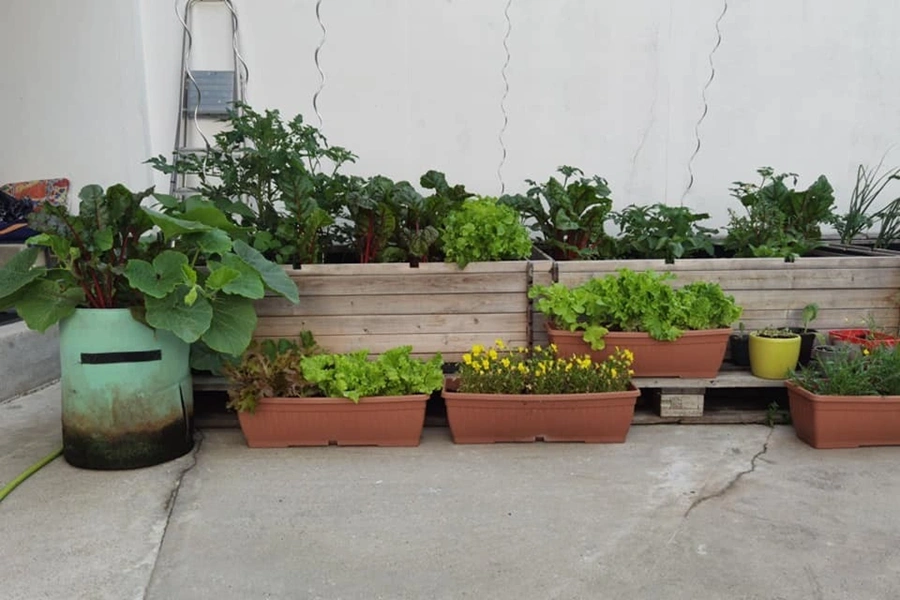 The team examined underutilized spaces like rooftops and gardens as potential areas for urban vegetable farming (Image credit: Prajal Pradhan).
“Urban agriculture could significantly strengthen local food systems, improve urban resilience, and reduce the environmental impacts associated with long-distance food transportation,” says Pradhan.
While the study has not explored the potential cost savings for food ingredient companies in terms of sourcing and transportation of ingredients, Pradhan emphasizes that the cost accounting depends on various factors.
“Our study identifies one of the initial factors to consider — production potential. In cities with high production potential, the next step is to account for costs under different production conditions and scenarios.”
Pradhan also points to the price stability for vegetables produced in urban farming systems being difficult to predict, particularly due to inherent seasonal fluctuations.
“If we rely solely on vegetables produced in the surrounding urban areas, there would be greater seasonal fluctuations. This need not be a problem, as a sustainable transformation of our food systems requires consuming more regional and seasonal products.”
Need for policy support
The authors explain that the potential of urban agriculture varies widely based on factors such as city density, land availability, climate, water availability, and urban planning policies and regulations.
 Planning and policy support can help unused urban land become key to Europe’s future food infrastructure, says Diego Rybski.Policy support in terms of encouraging and incentivizing consumers to grow food around their homes would lead to more food production in urban areas, says Pradhan.
“These policies would include promoting home and community gardens through education and proper mechanisms for bringing the produce to market. In this case, we might also need policies to encourage food ingredient suppliers and CPGs to develop innovative solutions to bring these locally produced foods to market.”
“An example would be having periodic local markets or home collections of such produced food. While doing so, there should also be a strong protocol to ensure food safety.”
The authors describe the study as “one of the most comprehensive assessments of the potential for urban agriculture across Europe to date,” offering critical insights that can guide urban planners, policymakers, and sustainability advocates in effectively integrating food production into urban landscapes.