

EU-US tariff standoff over Greenland threatens billions in agri-food costs

Key takeaways
- The European Parliament has postponed a vote to ratify the EU-US trade deal in response to Trump’s Greenland-related tariff threats against NATO members.
- EU agri-food exports to the US totaled €24.2 billion (US$26.6 billion) in Jan-Oct 2025; proposed tariffs of 10-25% could add up to €7.3 billion (US$8 billion) in costs.
- The EU is considering activation of the “trade bazooka” Anti-Coercion Instrument, which could shut US companies out of the single market.
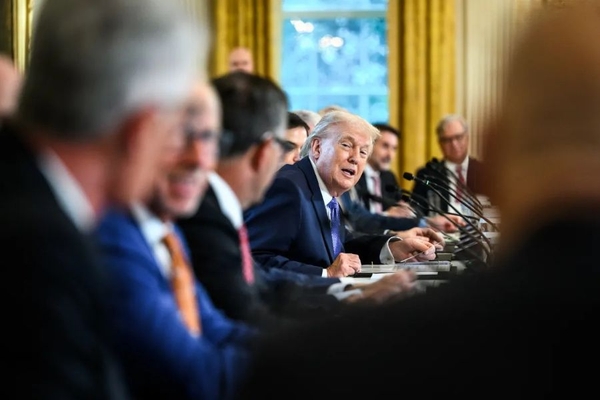
The European Parliament has postponed a vote to ratify the EU-US trade agreement, initially scheduled for late January, after US President Donald Trump announced new tariffs targeting eight European countries over their opposition to US efforts to acquire Greenland.
The bloc is taking the measure in solidarity with affected NATO members, which include major EU economies France, Germany, and the Netherlands. Trump’s tariffs, set at 10% from February 1 and rising to 25% by June, threaten billions of dollars in EU agri-food exports to the US market.
Derailed trade agreement
The EU-US trade agreement was concluded in July 2025 between European Commission President Ursula von der Leyen and President Trump. Under its terms, the US set tariffs at 15% on most European goods, while the EU committed to eliminating duties on US industrial goods and some agricultural products. Though already partially implemented, the deal still requires European Parliament approval.

That approval now looks unlikely in the near term. Manfred Weber, leader of the European People’s Party (EPP), the parliament’s largest political group, says the deal cannot proceed given current circumstances.
“The EPP is in favor of the EU-US trade deal, but given Donald Trump’s threats regarding Greenland, approval is not possible at this stage,” he writes on social media. “The 0% tariffs on US products must be put on hold.”
Bernd Lange, chair of the parliament’s trade committee, says “a new line has been crossed” and calls for work on the trade deal to be suspended until US threats cease. An extraordinary summit of EU leaders has been convened for this week to coordinate a response.
Agri-food trade at stake
European Commission data published in December 2025 underscores what is at risk for the agri-food sector. Between January and October 2025, EU agri-food exports to the US totaled €24.2 billion (US$26.6 billion). Over the same period, the EU imported €10.9 billion (US$12 billion) in agri-food products from the US, giving the bloc a trade surplus with the US of approximately €13.3 billion (US$14.6 billion).
Proposed tariffs of 10-25% could add up to €7.3 billion (US$8 billion) in costs to the agri-food sector.EU exports to the US had already declined by €830 million (US$913 million), or 3%, compared to the same period in 2024, driven primarily by lower olive oil prices and reduced wine and spirits shipments. Wine and wine-based products, spirits and liqueurs are among the EU’s top export categories to America.
On the import side, the US saw the third-largest increase in shipments to the EU over the period, up €1.3 billion (US$1.4 billion) or 13%, driven by higher maize imports and elevated prices for nuts.
At the tariff levels Trump has threatened, the additional cost burden on EU agri-food exports would be substantial. A 10% tariff on an annualized export value of approximately €29 billion (US$31.9 billion) would add roughly €2.9 billion (US$3.2 billion) in costs for European exporters or their US customers. At 25%, that figure rises to approximately €7.3 billion (US$8 billion).
The eight countries targeted — Denmark, Finland, France, Germany, the Netherlands, Norway, Sweden, and the UK — include several of the EU’s largest agri-food exporters.
The “trade bazooka”
As the standoff escalates, attention has turned to one of the EU’s most powerful but never-used trade defense mechanisms: the Anti-Coercion Instrument (ACI). Adopted in 2023, the tool is designed specifically to protect the bloc and its member states from economic pressure by third countries seeking to influence policy decisions.
French President Emmanuel Macron is reportedly pushing the EU to activate the instrument, telling fellow leaders that the current situation is precisely what the ACI was designed to address. Under the regulation, economic coercion is defined as when a third country “applies or threatens to apply measures affecting trade or investment to prevent or obtain the cessation, modification, or adoption of a particular act by the EU or a member state.”
The ACI’s potential countermeasures would allow the EU to largely shut off access to the single market’s 500 million consumers, limit trade licenses, exclude foreign companies from public procurement tenders, and restrict access to financial markets.
If the ACI is triggered, the commission has four months to assess the case. After this period, member states must decide by a qualified majority whether to confirm that economic coercion is taking place. A negotiation phase would follow before countermeasures could be deployed.
Not all member states favor immediate activation. An emergency meeting of EU ambassadors in Brussels on Sunday saw the bloc opt to prioritize dialogue and diplomacy with Washington before reaching for what some diplomats describe as the “nuclear option.”
Should diplomacy fail and the tariffs take effect, the EU could also revive a €93 billion (US$102 billion) retaliation package prepared last year that targets US products from bourbon to aircraft components. That package was shelved when the July trade deal was agreed.