



Study links soybean oil to weight gain amid rising US consumption

Key takeaways
- Soybean oil drives weight gain in mice through liver-derived oxylipins formed from linoleic acid, which promote inflammation and fat accumulation.
- Genetic differences in the liver protein HNF4a determine susceptibility, explaining why individuals may respond differently to high soybean-oil diets.
- High-linoleic oils widely used in processed foods may trigger metabolic pathways humans aren’t adapted to handle, raising concerns despite the oils containing no cholesterol. ?

Scientists have discovered that soybean oil — whose consumption in the US has increased fivefold in the past century — triggers weight gain in mice through liver-derived molecules called “oxylipins.” Despite soybeans being rich in plant-based protein and their oil containing no cholesterol, excessive intake of high-linoleic oils such as soybean and corn oils may trigger metabolic pathways that humans did not evolve to handle, the researchers warn.
Soybean oil is the most commonly used cooking oil in the US. It is an ingredient in a wide range of processed foods, which are increasingly being scrutinized for health risks, including metabolic disease, obesity, and chronic disease.

The study outlines a metabolic pathway showing how high soybean oil intake drives weight gain in mice through the production of oxylipins. Linoleic acid is broken down into oxylipins within the body, and excessive linoleic acid intake can increase oxylipin levels, potentially leading to inflammation and fat accumulation.
During the experiments, mice fed a high-fat diet rich in soybean oil gained significant weight, while genetically engineered mice with an altered form of the liver protein HNF4α did not, despite consuming the same diet.
This suggests that genetic variations in a key liver protein determine who is more susceptible to these effects, providing insight into why diets rich in soybean oil may have different impacts on individuals.
“This may be the first step toward understanding why some people gain weight more easily than others on a diet high in soybean oil,” says Sonia Deol, a biomedical scientist and corresponding author of the study at the University of California, Riverside (UCR) in the US, which conducted the study.
Understanding human impact
The research, published in the Journal of Lipid Research, states that humans produce both versions of the liver protein HNF4α. However, the alternative form generally appears only in specific conditions like chronic illness or metabolic stress from fasting or alcoholic fatty liver.
Variations in this protein, combined with individual differences in age, sex, genetics, and medications, may help explain why some people are more susceptible to the metabolic effects of soybean oil, the scientists note.
The latest findings expand on previous UCR research linking soybean oil to weight gain.
“We’ve known since our 2015 study that soybean oil is more obesogenic than coconut oil,” says author Frances Sladek, a UCR professor of cell biology.
“But now we have the clearest evidence yet that it’s not the oil itself, or even linoleic acid. It’s what the fat turns into inside the body.”
The team also found that mice consuming soybean oil had higher cholesterol levels, despite the oil itself containing no cholesterol.
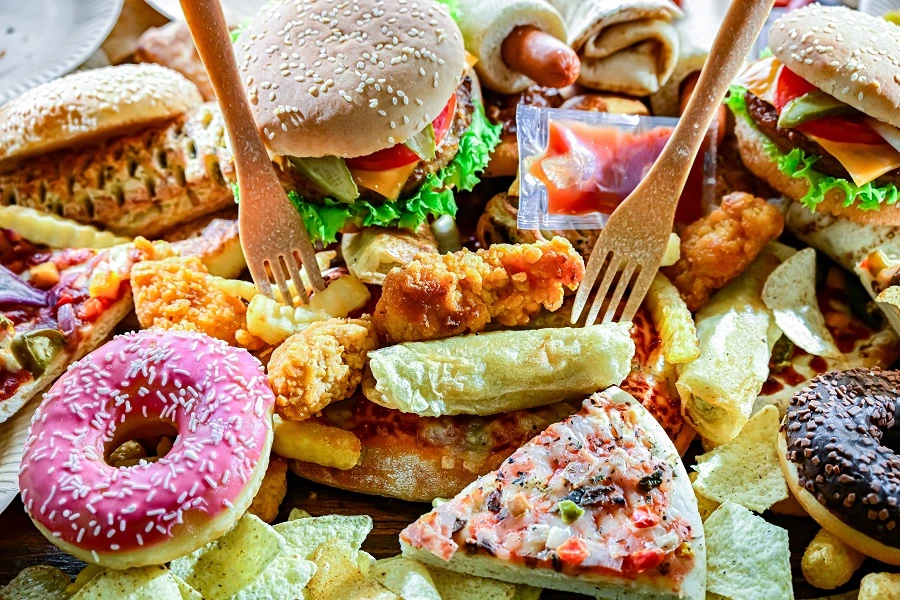 Soybean oil is widely used in processed foods, and the study suggests its breakdown products — not the oil itself — may contribute to obesity.
Looking ahead
The researchers are now investigating how oxylipins contribute to weight gain and whether oils containing high amounts of linoleic acid, such as sunflower, safflower, and corn oils, lead to similar reactions.
“Soybean oil isn’t inherently evil,” Sladek notes. “But the quantities in which we consume it are triggering pathways our bodies didn’t evolve to handle.”
The team is currently not planning human trials and expects its findings to inform future studies and guide nutrition-related policy.
“It took 100 years from the first observed link between chewing tobacco and cancer to get warning labels on cigarettes. We hope it won’t take that long for society to recognize the link between excessive soybean oil consumption and negative health effects,” Sladek concludes.