


Fi Europe 2025: Food Manufacturing finalists tackle powder handling, bioactive packaging

Key takeaways
- Tetra Pak’s Industrial Protein Mixer eliminates foaming in high-protein production, saving over €100,000 (US$116,000) annually.
- Handary’s Hekon membrane uses bio-inspired nanotechnology to cut food waste by 40% in pilot trials.
- Tetra Pak’s Air Jet Cleaning System reduces powder equipment cleaning time from 90 to 30 minutes.
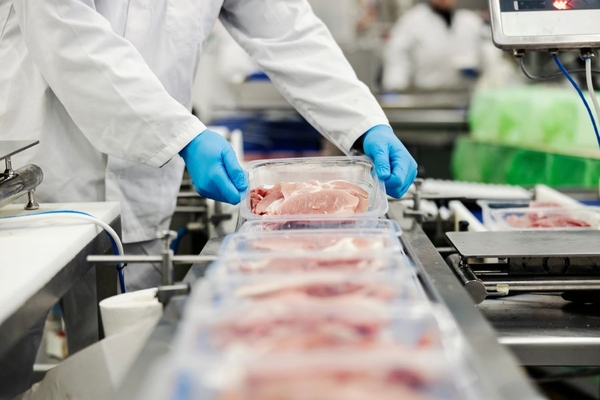
Fi Europe has announced the finalists for its Food Manufacturing Innovation Award, spotlighting technologies that address critical efficiency and sustainability challenges in food production.
The category recognizes innovations in processing equipment and systems that improve manufacturing operations while reducing waste and energy consumption.
The four finalists — Handary’s Hekon microporous membrane, two entries from Tetra Pak addressing protein and powder processing, and Hosokawa Alpine’s Microburst AMB grinding system — were selected from 177 submissions across all six award categories, a 22% increase from 2024’s 145 entries.
The shortlisted entries will be evaluated by a panel of 11 industry experts, led by Colin Dennis, chair of the board of trustees at the Institute of Food Technologists.

Winners will be announced at the Fi Europe Celebration and Awards ceremony tomorrow in Paris, France. We speak to the nominees about their products ahead of the show to learn more.
Tetra Pak: Eliminating foam in protein processing
Tetra Pak’s Industrial Protein Mixer addresses a costly problem in high-protein beverage production: foaming during powder mixing, leading to product loss, extended downtime, and reliance on defoaming agents.
“The rise in demand for high-protein, low-fat, and functional foods, alongside the rapid growth of plant-based and additional proteins, created a clear need for innovation in mixing technology,” a Tetra Pak spokesperson tells Food Ingredients First. “Producers were struggling with foaming during protein powder mixing, which leads to costly product loss, downtime, and the use of defoaming agents.”
The system combines a dynamic baffle at the tank base to prevent vortex formation with smart sensors that continuously monitor foam activity. These sensors feed data to an automated vacuum control system, ensuring precise deaeration and complete protein dissolution.
By eliminating foaming, the mixer reduces cleaning downtime by up to 455 hours annually and can save large-scale operations over €100,000 (US$116,000) per year in reduced product loss. It also removes the need for defoaming agents, simplifying formulations and supporting clean label claims.
The mixer handles dairy proteins, plant-based alternatives, and novel protein sources at capacities up to 50,000 liters per hour, making it suitable for applications ranging from sports drinks and infant formula to plant-based beverages and medical nutrition.
Tetra Pak: Dry cleaning for powder equipment
Tetra Pak’s second finalist, the Air Jet Cleaning System for Powder, replaces manual cleaning and wet-cleaning-in-place methods with a dry, automated approach for powder handling equipment.
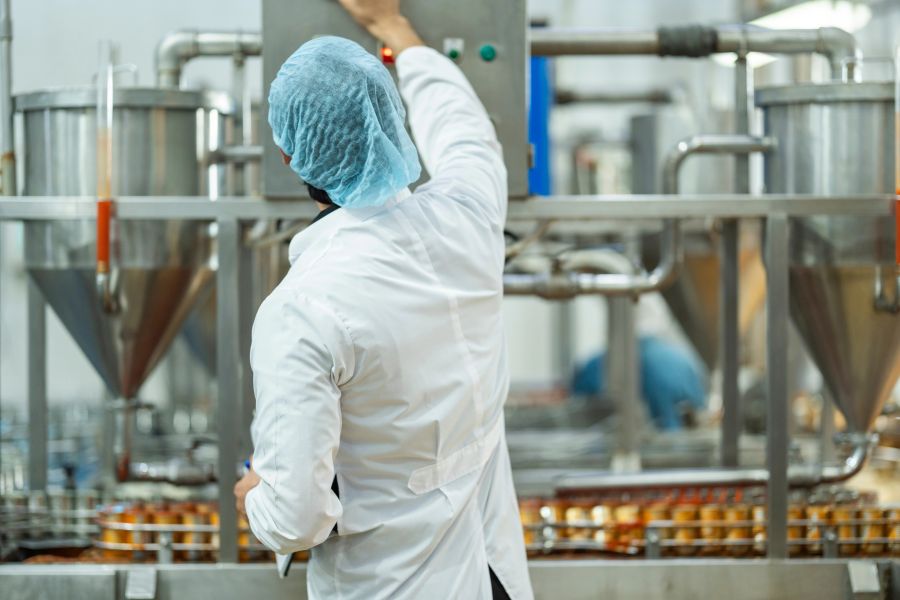 Innovations in food safety technology are advancing hygiene standards for producers.Traditional cleaning requires opening equipment, creating dust clouds, and posing hygiene risks. “Manual cleaning is still common practice, but it requires opening the equipment, creating dust clouds that spread into the surrounding area and trigger additional cleaning,” the spokesperson says.
“Food safety is another critical concern: every time equipment is opened for manual intervention, hygiene risks increase.”
The system utilizes high-speed compressed air jets, combined with vacuum extraction, to remove powder residues from all internal surfaces without requiring the machine to be opened. This maintains a sealed environment and eliminates moisture-related microbial growth risks associated with liquid cleaning.
Cleaning time is reduced from 90 minutes to 30 minutes per cycle, resulting in net annual savings of €44,000 to €50,000 (US$51,000 to US$58,000), depending on operator wages and cleaning frequency. Trials have shown that the flushing function recovers up to 50 liters of product per batch, reducing annual product losses by 35,000 to 52,500 liters.
The dry cleaning approach also eliminates water and chemical usage, removing wastewater treatment requirements and the need for drying after cleaning. The system is compatible with multiple powder handling solutions, including mixers and surge hoppers, and can be easily adapted to other equipment brands.
Handary: Nature-inspired packaging extends shelf life
Handary’s Hekon microporous membrane adopts a distinct approach to food manufacturing innovation, leveraging bio-inspired design to enhance freshness without relying on energy-intensive modified-atmosphere packaging or chemical preservatives.
“Most food spoilage after harvest is not caused by contamination, but by uncontrolled respiration, moisture loss, and oxidation,” says Dr. Aimin He, managing director of Handary. “Conventional plastics and MAP systems try to control these effects mechanically or chemically — often at high energy and environmental cost.”
The membrane utilizes heavy-ion track-etching nanotechnology to create uniform, nano-scale pores measuring 50 to 300 nanometers, mimicking the way plant cuticles regulate gas and water exchange. This allows the packaging to passively manage the balance of oxygen and carbon dioxide while controlling humidity, slowing respiration, and inhibiting microbial growth.
“The toughest challenge was achieving precise, stable nano-pore control in biodegradable, food-grade polymers,” he tells us. The development team conducted over a thousand parameter iterations, adapting heavy-ion track-etching — a technology from nuclear and biomedical fields — to food-contact applications under FSSC 22000 constraints. Avoiding microplastics in food packaging is increasingly important given emergency evidence of associated health harms.
The membrane is composed of renewable, biodegradable PLA-chitosan biopolymers, leaving no microplastic residue. Pilot trials have shown that it eliminates 100% of MAP gas usage, reduces energy consumption by approximately 20%, cuts food waste by roughly 40%, and decreases preservative use by about 70%.
Hekon is transitioning from pilot to early commercial adoption with major fresh-produce packers for blueberries, cherries, and grapes. Two converters are currently qualifying the membrane as a functional film layer compatible with existing production lines.
Hosokawa: Ultra-fine grinding without pre-crushing
Hosokawa Alpine’s Microburst AMB spiral jet mill addresses a processing limitation in functional food and specialty ingredient production: the need for expensive pre-crushing before fine grinding.
The system uses a large, central inlet that allows coarser ground material and even fibrous products to be processed directly, eliminating the pre-crushing step. According to the company, the design was named after a weather phenomenon, with falling downdraughts reflected in the central material feed and concentrated energy input.
“With our AMB spiral jet mill, manufacturers of functional food or finely ground food products will have access to an optimized solution,” says Jürgen Zeller, sales manager for Hosokawa Alpine's food division. Scientific studies show fine milling in functional food production improves extractability, solubility, mouthfeel, and bioactivity.
Applications include fine milling of tea, natural flavors and colors for clean-label products, and processing of fibrous materials like cannabis, cellulose, and PLA/PLGA biopolymers. The grinding chamber can be adjusted to match material properties, and the system is available in sizes 100, 200, and 315.
The monobloc design uses clamp fittings for fast disassembly and cleaning, with a simple explosion protection system and modular machine design. A baseline variant offers semi-automated, economical production for smaller operations.
Judging and awards
All finalists will present in person on 1 December, with the Food Manufacturing Innovation Award winner announced at the Fi Europe Celebration and Awards ceremony on 2 December. The ceremony also marks Fi Europe's 30th edition.
Food Ingredients First has also spotlighted finalists across other Fi Europe 2025 Innovation Award categories, including Dairy Alternative Innovation, Sustainability Innovation, Future Foodtech Innovation, and Plant-Based Innovation.