



Singapore study finds mushroom fermentation boosts okara’s protein and flavor


Key takeaways
- Mushroom fermentation boosts the protein content of okara while enhancing compounds linked to savory, umami flavor.
- The research highlights a potential route to turn soybean processing by-products into higher-value food ingredients.
- Further work will assess food safety, shelf life, fermentation conditions, sensory properties, energy use, and commercial viability.
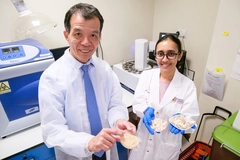
A soybean by-product often treated as waste could gain a new role in food formulations, with researchers at Nanyang Technological University (NTU), Singapore, using oyster mushroom fermentation to improve the nutritional and sensory properties of okara.
Okara is the fibrous pulp left over after making soy milk or tofu.
The lab-scale study found that fermenting okara with oyster mushroom mycelium increased its protein content and boosted compounds associated with savory, umami flavor, while reducing sourness.
The findings point to a potential route for turning a highly perishable residue from tofu and soymilk production into a higher-value food ingredient.
Okara is produced in large quantities during soybean processing but has several characteristics that have limited its use in food, including high moisture content, a coarse texture, high levels of insoluble fiber, and a relatively sour taste.
These properties mean it is frequently discarded or diverted to lower-value animal feed applications.
The NTU team used solid-state fermentation, allowing oyster mushroom mycelium to grow directly on the moist soybean material. As the fungus developed, its enzymes broke down complex plant fibers into simpler nutrients, with the researchers recording protein levels of 27.7–30.2% by dry weight and increases in glucose concentrations of up to 6.4 times.
For the food and ingredients industry, the research highlights how fermentation could address two challenges, namely improving the functionality and flavor of an underused plant-based by-product, and creating new opportunities for its incorporation into food products.
The work, carried out in partnership with Japanese food manufacturer Ichimasa Kamaboko and published in Food Chemistry: X, remains at the proof-of-concept stage.
Fermentation boosts okara’s profile
The researchers say further work is needed to assess food safety, storage stability, energy requirements, process optimization, production economics, and consumer acceptance before the approach can be considered for commercial scale-up.
“Okara is a soybean by-product that is rich in nutrients, but its high fiber content, short shelf life, and less appealing flavor have long limited its use in food products for people,” says lead investigator of the study, Professor William Chen, director of NTU’s Food Science and Technology Programme, School of Chemistry, Chemical Engineering and Biotechnology (CCEB).
Mushrooms improve flavor and nutrition
The study’s findings show that oyster mushroom mycelium can naturally improve okara by changing its composition and producing compounds that give it a savory, umami taste.
In addition, a separate study by the team also showed that oyster mushrooms grown on a substrate containing okara have enhanced nutritional value.
“Together, these findings create an opportunity to make better use of both okara and mushrooms as sustainable food sources in the future,” says Chen.
“This proof-of-concept approach offers a promising way to turn okara into more valuable food ingredients instead of discarding it, though further research is needed to evaluate pre-treatment requirements, energy efficiency, scale-up feasibility, and production economics alongside food safety and consumer acceptance.”
The researchers used solid-state fermentation, growing oyster mushroom mycelium directly on the moist okara. During the process, enzymes produced by the fungus break down complex plant fibers into simpler compounds, altering the composition of the soybean by-product and making more of its nutrients available.
The process increased protein levels in the fermented okara to 27.7–30.2% by dry weight, while glucose concentrations rose by as much as 6.4 times.
From by-product to ingredient
The researchers also identified changes in compounds linked to flavor, including an increase in amino acids associated with savory and umami notes, alongside a reduction in sourness.
These changes could help address some of the characteristics that have limited okara’s use in food. While the soybean by-product already contains protein, fiber, and other nutrients, its moisture content, coarse texture, and flavor profile can make it difficult to incorporate into mainstream food products.
Fermentation could therefore offer a way to improve both its nutritional profile and sensory appeal, potentially broadening its applications as a food ingredient.
First author Dr. Malsha Samarasiri, research fellow at NTU’s School of CCEB, says: “Rather than treating okara solely as a waste stream, our research demonstrates that mushroom fermentation can create new, high-value opportunities to use this soybean by-product in food applications, contributing to a more circular and sustainable food system.”
The NTU team will next assess energy use, food safety, shelf life, sensory properties, and fermentation conditions, alongside the economics of commercial scale-up.



Upcoming webinars

Oat-Standing Ingredients - Showcasing Irish Grain Through Innovation
Tirlán Ingredients

2027 Food Safety Risks for Quality & Compliance Leaders
FoodChain ID

Formulating for function: Developing benefit-led beverages with natural colours, botanicals, and flavours
Givaudan Sense Colour