

Kraft Heinz pauses planned breakup as sales slide deepens


Key takeaways
- Kraft Heinz pauses its planned separation into two companies, redirecting resources toward a US$600 million investment in marketing, sales, and R&D to return to profitable growth.
- Full-year 2025 net sales fell 3.5% to US$24.9 billion, with a net loss of US$5.85 billion, driven by US$9.3 billion in non-cash impairment charges.
- The 2026 outlook projects further organic net sales declines of 1.5%–3.5% and adjusted EPS of US$1.98–US$2.10, well below analyst expectations, as the company rebuilds its US business.
Kraft Heinz has paused the planned separation of its business into two independent companies and announced a US$600 million investment in marketing, sales, and R&D after reporting a full-year net loss of US$5.85 billion for 2025, driven by US$9.3 billion in non-cash impairment charges.
The move comes as the packaged food giant continues to battle declining volumes in North America, its largest market, with organic net sales falling 3.4% for the year and 4.2% in the fourth quarter.
Separation shelved under new leadership
The decision to pause the split — which was first announced in September 2025 and would have divided Kraft Heinz into a “Global Taste Elevation” company (housing Heinz, Philadelphia, and Kraft Mac & Cheese) and a “North American Grocery” company (Oscar Mayer, Kraft Singles, and Lunchables) — marks a significant strategic reversal under new CEO Steve Cahillane, who took the helm in January. The separation had been expected to close by the end of 2026.
“My number one priority is returning the business to profitable growth, which will require ensuring all resources are fully focused on the execution of our operating plan. As a result, it is prudent to pause work related to the separation, and we will no longer incur related dis-synergies this year,” Cahillane says in the company’s earnings release.
The company says it will not incur US$300 million in dis-synergies or meaningful additional one-time costs in 2026 as a result of the pause.
According to a 2022 KPMG report cited by Reuters, only about one in ten corporate spin-offs are canceled on average. Reuters also reports that Cahillane — who previously guided Kellogg through one of the packaged food industry’s largest breakups two years ago — told the wire service in an interview in December that he “reserves the right” to improve Kraft Heinz’s planned split.
The new plan is a departure from previous CEO Miguel Patricio’s rationale, Reuters notes. Patricio had said the complexity of Kraft Heinz’s “current structure” made it challenging to allocate capital effectively.
US$600 million bet on commercial recovery
The reinvestment plan allocates US$600 million across marketing, sales, and R&D, as well as product superiority and select pricing. “To accelerate the momentum we are already seeing in our Taste Elevation portfolio and drive recovery in our US business, we are announcing a US$600 million investment,” Cahillane says in the earnings release. “We are confident in the opportunity ahead and believe this investment will accelerate our return to profitable growth.”
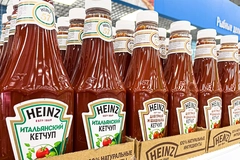
The company’s “Taste Elevation” portfolio, which includes Philadelphia Cream Cheese, Kraft Salad Dressing, and Heinz Ketchup, showed improved market share performance in Q4, according to the earnings release. Board chair John T. Cahill says the decision to pause the separation and redirect investment reflects confidence in Cahillane’s approach: “We are confident that our decision to pause the work related to the separation and fully focus our resources in service of growth is the right move at this time.”
Full-year and Q4 results
For the full year, net sales fell 3.5% to US$24.9 billion. Volume/mix declined 4.1%, with declines in North America and International Developed Markets partially offset by growth in Emerging Markets. Pricing contributed a positive 0.7% points, largely driven by price increases in coffee to mitigate higher input costs. Unfavorable volume/mix was primarily driven by declines in cold cuts, coffee, frozen meals, snacks, certain condiments, bacon, and spoonables, according to the earnings release.
The full-year operating loss of US$4.7 billion was driven by US$9.3 billion in non-cash impairment charges, triggered by a sustained decline in the company’s stock price. Adjusted operating income was US$4.7 billion, down 11.5%. Adjusted EPS came in at US$2.60 — a 15% decline from US$3.06 in the prior year.
Q4 specifically saw net sales of US$6.35 billion, down 3.4%, with organic net sales declining 4.2%. North America was hardest hit, with organic net sales in the segment falling 5.4%, driven entirely by volume/mix declines. Adjusted EPS for the quarter was US$0.67, down 20.2% year on year. Free cash flow was a relative bright spot at US$3.7 billion for the year, up 15.9%, driven by working capital improvements and reduced capital expenditure.
Cautious 2026 outlook
Looking ahead, Kraft Heinz expects organic net sales to decline a further 1.5% to 3.5% in 2026, with adjusted EPS guided between US$1.98 and US$2.10. Constant currency adjusted operating income is projected to fall 14% to 18%, reflecting the US$600 million commercial investment and the headwind from lapping lower variable compensation in 2025.
The outlook includes an approximate 100-basis-point impact from incremental headwinds related to delays in US food-stamp benefits, according to the company.
Reuters reports that market conditions in the US have worsened since Kraft Heinz made the decision to split last summer, with the company — like other packaged food businesses — struggling with weak demand as consumers seek cheaper alternatives to branded products.
Shares of Kraft Heinz dropped approximately 7% following the announcement, according to Reuters.


Upcoming webinars
Oat-Standing Ingredients - Showcasing Irish Grain Through Innovation
Tirlán Ingredients

2027 Food Safety Risks for Quality & Compliance Leaders
FoodChain ID
Formulating for function: Developing benefit-led beverages with natural colours, botanicals, and flavours
Givaudan Sense Colour