



Future Food-Tech San Francisco 2026: SternMaid Ingredients on clean label opportunities in alt-protein


Key takeaways
- SternMaid is highlighting clean label innovation and sustainable protein sourcing at Future Food-Tech San Francisco 2026 for improved texture in alt-proteins.
- Enzymatic systems can help manufacturers mimic alternative meat textures and bite.
- Clean label innovation provides manufacturers with opportunities to enhance plant protein flavor and reduce off-flavors.
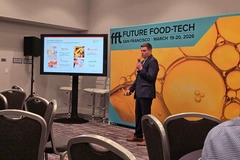 At Future Food-Tech, Kyle Borkovec, CTO at SternMaid Ingredients USA, discussed how ingredient expertise drives clean label innovation in sustainable proteins (Image credit: SternMaid Ingredients).
The alternative protein industry faces significant challenges when it comes to clean label attributes, as consumers increasingly favor ingredients they can recognize. Stricter regulatory scrutiny adds to these demands, which SternMaid Ingredients USA is navigating with clean label innovation and sustainable protein choices. The company is showcasing these solutions at Future Food-Tech in San Francisco, US (Mar 19-20).
Investors, entrepreneurs, CPGs, retailers, and ingredient and technology providers are discussing key themes like AI, GLP-1, the future of snacking, and cleaner labels at the two-day event. It is expected to attract over 900 visitors from 44 countries, 115 speakers, and 318 start-ups.
SternMaid Ingredients’ day-one session, titled “From Field to Fork: How Ingredient Expertise Enables Clean Label Innovation,” explored how an integrated approach helps manufacturers develop clean label foods that support more sustainable protein choices.
More than one in four global consumers look to clean label products as a primary route to health, and want to avoid additives and preservatives — making the presence of clean labels “a core health demand,” finds Innova Market Insights research.
“Clean label expectations have evolved quickly. Consumer insights from organizations like The Good Food Institute and Innova show that recognizable ingredients and shorter declarations are increasingly influencing purchasing decisions,” Kyle Borkovec, chief technology officer at SternMaid Ingredients USA, tells Food Ingredients First.
At the same time, alternative proteins are facing greater scrutiny from both consumers and policymakers, as the industry targets familiar taste and texture with simpler ingredient lists.
“This dynamic made Future Food Tech the ideal venue to share our latest work. At SternMaid Ingredients, we focus on how ingredient expertise connects the entire value chain — from crop selection and protein isolation to formulation science,” Borkovec says.
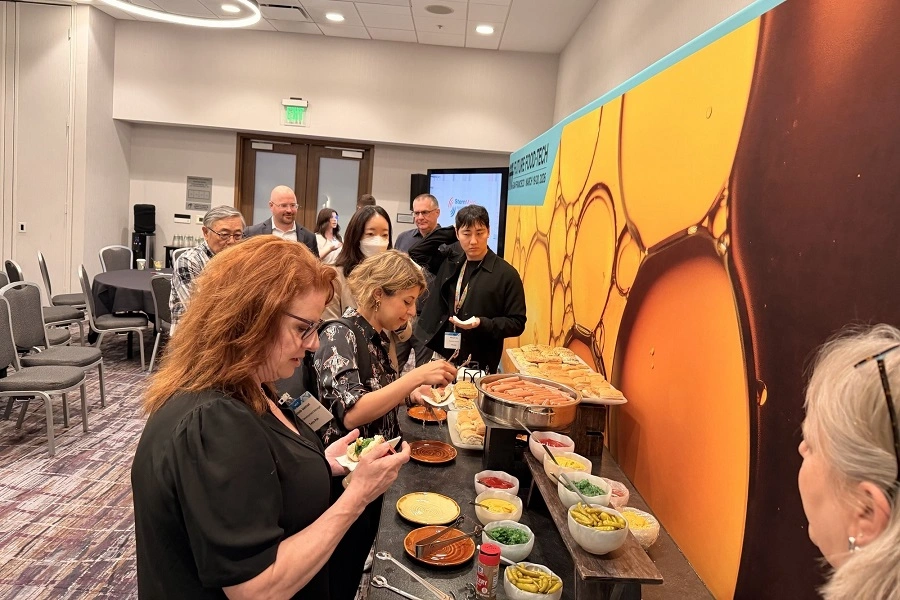 Attendees at the session tasted SternMaid’s clean label hot dog made using red lentil protein and enzyme-enabled technology (Image credit: SternMaid Ingredients).
Clean label: More than ingredient swaps
Clean label performance isn’t achieved by swapping a single ingredient, but comes from aligning raw materials, processing, and functionality, Borkovec explains. This allows proteins to deliver structure and texture naturally.
Clean label functionality in alt-protein products starts long before formulation — with sourcing the right crops, where factors like growing conditions and varietal selection influence protein composition and quality.
“From there, how the protein is isolated matters just as much — gentle processing helps preserve solubility and reactive sites critical for functionality. Finally, formulation brings those elements together.”
The focus on clean label ingredients coincides with regulatory changes in the US, such as bans on synthetic additives and tightening standards that push manufacturers to explore clean label reformulation that align with shifting consumer health priorities. For instance, industry heavyweights are now focusing on clean label plant proteins that replace complex binding systems in meat alternatives.
Matching meat “bite and snap” with enzymes
Aligning protein structure with technologies like enzymatic cross-linking can help meat substitute manufacturers create the texture and cohesion consumers expect, “without relying on traditional binders,” Borkovec says.
At Future Food Tech, SternMaid Ingredients showcased a live demonstration of a clean label hot dog made with red lentil protein, combined with an enzyme-enabled structuring approach.
Describing the product as a “great benchmark product,” Borkovec emphasizes that if manufacturers can offer qualities like the “bite, snap, and overall texture” of meat in a clean label system, alternative proteins can perform “just as well as traditional formats.”
He explains that enzymatic systems work by reorganizing the protein network itself and holding a product together. “With the right raw materials and processing conditions, proteins partially unfold, exposing reactive amino acid sites. The right enzyme can then form covalent links between specific residues, allowing the proteins to reorganize into a cohesive network during processing that ultimately delivers bite, snap, and structural integrity.”
“Since the structure comes from the protein matrix itself, we can achieve these textures without relying on traditional binders, supporting cleaner ingredient declarations while making better use of the protein’s natural functionality.”
The resulting product has improved elasticity, a more defined snap, and stronger structural integrity during cooking.
Balancing protein taste and transparency
When creating clean label alternatives to traditional meat products, manufacturers consider balancing simplicity with performance as one of the biggest challenges.
“Consumers want shorter ingredient lists and greater transparency, but they still expect the same eating experience they are familiar with. Achieving that requires a deeper understanding of how proteins behave across the entire value chain,” Borkovec tells us.
He expects a closer collaboration between agriculture, ingredient science, and food manufacturing to help overcome these challenges.
“As crop breeding, protein isolation, and functional technologies continue to improve, we’ll be able to unlock more of the natural functionality already present in agricultural proteins, making clean label solutions both more effective and scalable.”
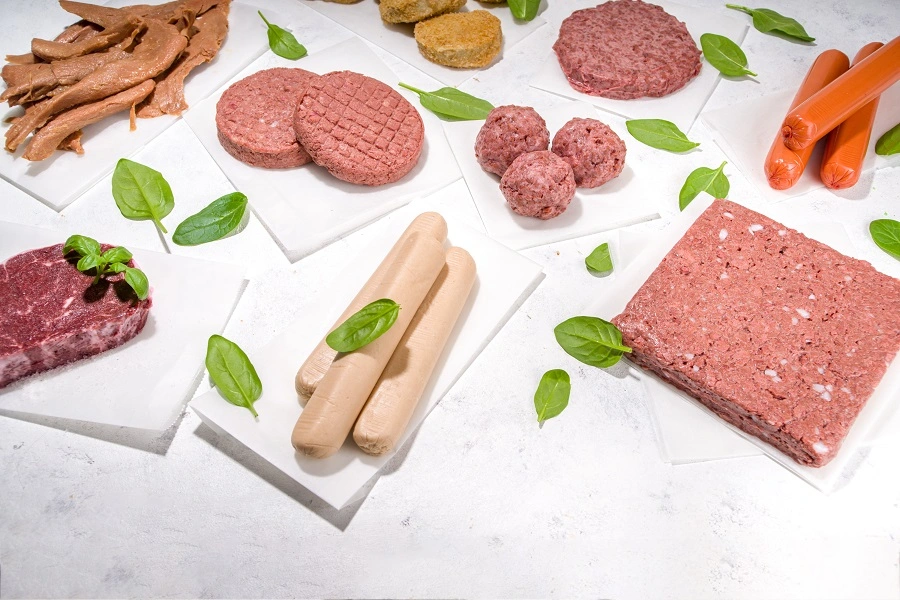 Enzyme systems help alt-meat manufacturers create the right texture by connecting protein molecules in a way that allows them to form a strong, cohesive structure, mimicking the bite and snap of conventional meat.
Unlocking clean label protein flavor opportunities
Looking ahead, Borkovec points to plant protein flavor improvements as one of the most exciting areas of clean label alt-protein innovation.
“Much of the early focus in alternative proteins was on structure and texture, but researchers are increasingly studying the precursor molecules that drive aroma and taste. Scientists are beginning to identify the compounds responsible for the grassy, bitter, or beany notes often associated with plant proteins.”
“As we better understand those pathways, new processing approaches — including advances in spray-drying techniques and flavor-precursor control — will help reduce off-flavors and allow plant proteins to taste more naturally like the foods consumers already enjoy.”
The future of clean label proteins isn’t about removing ingredients — it’s about “unlocking the functionality already present in the crop,” he concludes.