


Why UK supermarkets have committed to stricter prawn welfare standards

Key takeaways
- Lidl and Aldi Süd meet UK prawn welfare standards, banning practices like eyestalk ablation and ice-slurry slaughter, with Aldi Süd pledging to implement electrical stunning globally by 2035.
- The commitments follow growing consumer and industry demand for ethical sourcing, with all 11 major UK supermarkets now adopting time-bound prawn welfare goals.
- B2B suppliers must adapt to these stricter standards to stay competitive, as retailers and consumers increasingly prioritize animal welfare in seafood sourcing.

Lidl and Aldi Süd have agreed to improve prawn welfare standards by banning eyestalk ablation and ice-slurry slaughter for products sold in the UK. The commitments come after the International Council for Animal Welfare (ICAW) campaigned for the German supermarkets to match UK industry standards.
Aldi Süd has gone further by pledging to implement electrical stunning or similarly effective methods for all farmed prawns by 2035 and end eyestalk ablation by 2030 across its markets worldwide, including Europe, the US, and Australia — the broadest scope of any retailer commitment to date. The company has also committed to annual public progress reporting.

Lidl and Aldi Süd’s commitments mean that all 11 major UK supermarkets have now set a time-bound commitment on improved prawn welfare. What began with Waitrose, M&S, and Tesco has become a new baseline across UK grocery. However, the timelines for full implementation vary significantly, with some retailers targeting 2026 and Aldi Süd’s global pledge extending to 2035.
However, Aldi Süd’s global pledge creates an important distinction, as prawn welfare commitments have so far largely been a market-by-market issue. In mid-2024, no major UK supermarket had a firm timeline on prawn stunning methods, but then the commitments came in quick succession: 2024: Tesco, Sainsbury’s, M&S, and Ocado; 2025: Waitrose, Co-op, Morrisons, and Iceland; 2026: Asda, Lidl GB, and Aldi Süd.
Why prawn welfare matters
According to ICAW, prawns are the most consumed farmed animal in the UK, with over 1.2 billion individuals sold each year (more than chickens).
Two standard industry practices have come under particular scrutiny. In prawn hatcheries, breeding females routinely have one eyestalk cut off while alive to stimulate egg production. At slaughter, prawns are immersed in ice-water baths, a method that research suggests often fails to render them unconscious, leaving animals to suffocate over prolonged periods.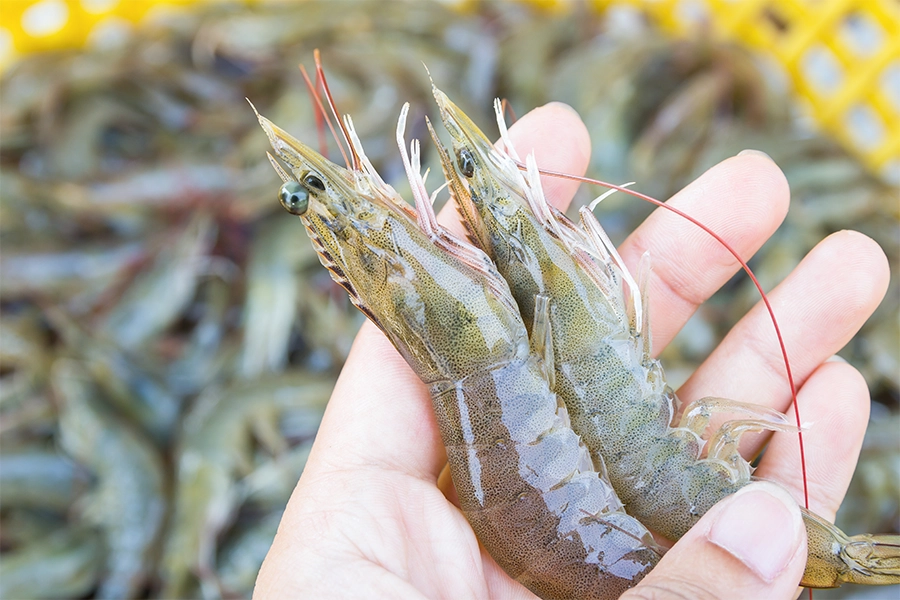 Research confirms prawn sentience, highlighting the need for more humane farming and slaughter practices.
Electrical stunning offers an alternative, rendering prawns unconscious within seconds. The equipment for this more ethical slaughter method is commercially available and already being rolled out across UK supply chains.
Research from the London School of Economics and the University of Stirling has established that prawns are sentient and capable of feeling pain, while the UK government recognizes crustaceans as sentient beings under the Animal Welfare (Sentience) Act 2022. However, there are currently no legal protections for decapod crustaceans, including prawns and shrimps.
Aldi Süd is investing in an industry-led research project to assess the effectiveness of electrical stunning and other potentially higher-welfare methods for warm-water shrimp.
“This project will conclude in 2028, and from this date, Aldi will start transitioning to electrical stunning or other measures confirmed by the study for its own-brand warm-water shrimp, with the aim of completion by 2035. We are committed to transparently report annually on the implementation status of preslaughter stunning methods from 2028 onwards,” the company states.
Animal welfare: A competitive advantage
The evolving prawn welfare landscape signals how ethical sourcing has become a key differentiator in UK food retail, creating both challenges and opportunities for businesses in the supply chain.
The pledges pressure seafood suppliers to adopt more humane practices in prawn farming, reflecting the growing consumer and industry demand for ethical sourcing. Innova Market Insights data reveals that 30% of consumers globally look for animal welfare claims on F&B products.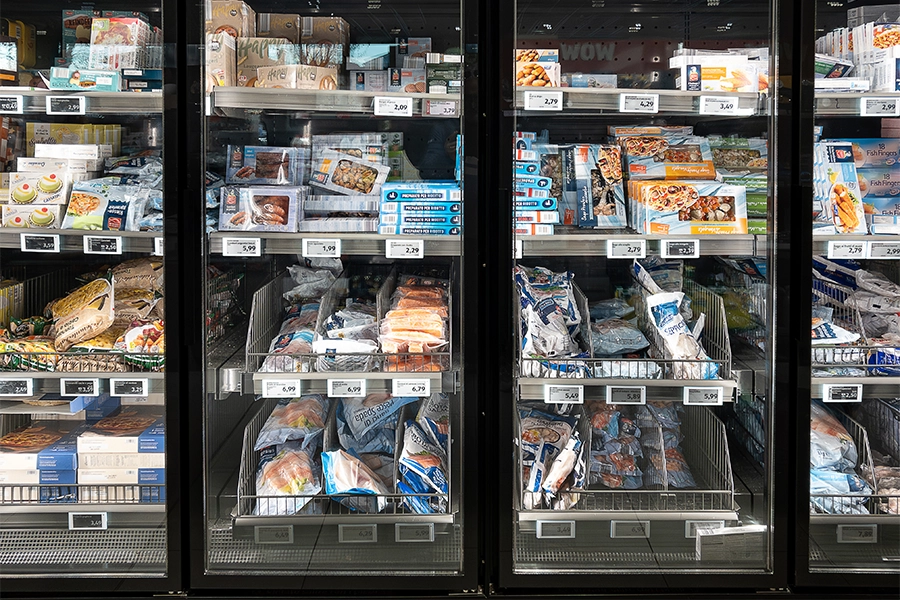 Stricter prawn welfare standards challenge B2B suppliers to adapt or risk losing business in the competitive market.
For B2B suppliers, this shift means adapting to stricter welfare standards or risking losing business. Suppliers who can quickly align with these new practices may gain a competitive edge, while those lagging behind could face increased operational costs or lose valuable contracts.
Several retailers are already implementing changes. Lidl GB says its core own-brand range has been ablation-free since January 2026, while Ocado has reported completing its transition to electrical stunning.
The momentum has also spread internationally, with Jumbo in the Netherlands and Intermarché in France committing in 2025 to eliminate eyestalk ablation from their supply chains and shift toward more ethical prawn and shrimp slaughter methods, such as electrical stunning.
“With Aldi Süd’s commitment, every major UK supermarket has now drawn a line on prawn welfare. The global scale of this pledge will make effective electrical stunning the norm well beyond Europe,” says Jonas Becker, head of Invertebrate Welfare at ICAW.
In late 2025, ICAW published an investigation into conditions on prawn farms linked to Aldi’s supply chain. The investigation was shared widely and reached hundreds of thousands of people. ICAW organized protests at Aldi’s UK headquarters in Atherstone and its German headquarters in Essen.



Upcoming webinars

2027 Food Safety Risks for Quality & Compliance Leaders
FoodChain ID

Formulating for function: Developing benefit-led beverages with natural colours, botanicals, and flavours
Givaudan Sense Colour
Let's reveal the grain potential: Innovate
Meurens Natural