
dsm-firmenich reveals rising mycotoxin risk across global feed markets


Key takeaways
- dsm-firmenich’s 2025 World Mycotoxin Survey finds all major mycotoxin contamination rates and average concentration levels have increased.
- More regions — including North & Central America, South Asia, and parts of Europe — have shifted into extreme risk categories.
- The findings point to a climate-linked shift in contamination patterns, increasing procurement and cost pressures across global feed and animal protein supply chains.
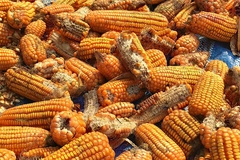
All major mycotoxin contamination rates and average concentration levels have increased, and more regions have moved into extreme risk, according to dsm-firmenich Animal Nutrition & Health’s World Mycotoxin Survey 2025. The results suggest that the food system faces a structural shift linked to climate patterns — not just a one-off seasonal issue — creating potential procurement, food safety, and cost issues for F&B businesses.
Mycotoxins are naturally produced by the fungi that can contaminate feed raw materials in the field and during storage. When ingested by animals, mycotoxins have a wide range of negative effects, such as impaired reproduction, digestive disorders, carcinogenicity, and reduced performance.

In December 2025, 25,626 samples were collected and analyzed from 95 countries. Compared to 2024, results concluded that all six main mycotoxins increased (aflatoxin, zearalenone, vomitoxin, fumonisins, T-2 mycotoxin, and ochratoxin A).
In 2025, an increased number of regions were found to be at extreme risk, including North & Central America, South Asia, parts of Europe, the Middle East, Sub-Saharan Africa, China & Taiwan.
The survey also found that mycotoxin risks that threaten feed quality and animal performance globally vary across regions, with multiple types of mycotoxins often occurring together.
“The 2025 results show a continued mycotoxin challenge, with contamination rates rising for both aflatoxins and zearalenone, and average levels increasing across all major mycotoxins,” says Ursula Hofstetter, head of Mycotoxin Risk Management at dsm-firmenich.
“We’re also seeing an expansion of extreme-risk regions reinforcing the importance of effective mycotoxin management strategies to support animal welfare, productivity, and the profitability of feed and animal protein production globally.”
Since 2004, dsm-firmenich Animal Nutrition & Health has analyzed thousands of global feed samples annually to understand and monitor contamination levels of various mycotoxins across different feed ingredients.
The company says effective mycotoxin risk management should include frequent testing along with a multi-strategy mitigation approach.
dsm-firmenich revealed this month that it plans to sell its Animal Nutrition & Health business to private equity firm CVC Capital Partners for approximately €2.2 billion (~US$2.6 billion). It will retain a 20% equity stake in the divested business.




Upcoming webinars

Oat-Standing Ingredients - Showcasing Irish Grain Through Innovation
Tirlán Ingredients

2027 Food Safety Risks for Quality & Compliance Leaders
FoodChain ID

Formulating for function: Developing benefit-led beverages with natural colours, botanicals, and flavours
Givaudan Sense Colour