




AI-powered near-infrared sensor targets plant allergen screening in food factories
Key takeaways
- New prototype uses near-infrared light and AI to screen for a group of plant proteins that includes allergens found in peach skin and peanuts.
- The team is developing the tool for routine food safety checks in factories, distribution centers, and kitchens serving institutions.
- Further reliability testing will help establish how the prototype could complement conventional laboratory analysis.

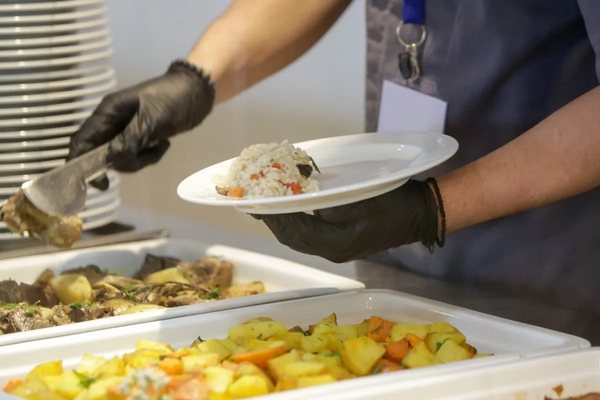
Spain’s University of Deusto and its partners have developed a prototype that uses artificial intelligence and near-infrared light to screen foods for plant allergens. The team is developing the tool for routine food safety checks in factories, distribution centers, and kitchens serving schools, hospitals, and care homes.
The researchers focused on lipid transfer proteins (LTPs), a family of proteins found in many plant foods. Some can trigger severe allergic reactions, and LTP allergies are particularly relevant in the Mediterranean region. The team studied two allergens from this group: Pru p 3, found mainly in peach skin, and Ara h 9, found in peanuts.
The university’s eVida research group developed the prototype through the smartJan project with technology company Kernet and Fundación Miranda. The project received funding through the Basque government’s Hazitek program.
How the sensor screens food
The prototype shines near-infrared light onto a food sample and measures how much light is reflected at different wavelengths. The resulting pattern gives the sample a spectral fingerprint, which software analyzes for signs of the target proteins.
The scan leaves the sample intact and can be performed on site. Deusto sees it as a way to screen food quickly alongside conventional analytical methods.
For manufacturers, faster screening could be useful when ingredient substitutions or formulation changes introduce new allergen risks.
Wider application potential
The team has completed the initial development phase and says it still needs to finalize protocols for checking the tool’s reliability. Deusto says the next step toward commercialization depends on industry interest.
The university’s announcement gives no performance figures for the prototype under factory conditions. For quality teams weighing AI’s role in food safety, questions of interest are how reliably the sensor performs across the foods they handle and when a result would warrant follow-up testing.
Begoña García-Zapirain, head of Deusto’s eVida research group, points to earlier tests for gluten and bacteria in meat as signs that the approach could have wider applications. The university identifies early detection of pathogens, such as Salmonella, as one area for future work.