


Danone’s €1B Huel acquisition: What does it signal for functional food?


Key takeaways
- Danone’s acquisition of Huel represents a major shift from niche meal replacements to mass-market, functional nutrition platforms.
- Rivals like Nestlé, Unilever, and PepsiCo face growing urgency to build or acquire digital-forward, omnichannel nutrition brands.
- The industry is pivoting toward integrated, outcome-driven nutrition solutions, combining convenience, health optimization, and digital engagement.
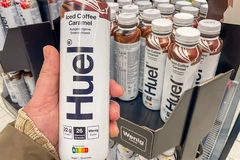
Danone’s move to acquire vegan British meal replacement brand Huel in a €1 billion (US$1.2 billion) deal signals that the French F&B multinational is cementing its place in the protein movement and betting on “complete nutrition” going mainstream.
Food Ingredients First explores why Huel is an attractive prospect for Danone, and how the acquisition of an omnichannel business with a strong direct-to-consumer foundation, an expanding international footprint, and a fast scaling retail business, reinforces its mission to develop health-focused, everyday nutrition.
Danone bolsters functional food portfolio
Danone offers international distribution and scale that Huel is unlikely to achieve alone, alongside manufacturing expertise and research capability. For Danone, Huel represents a cutting-edge digital food brand that promotes a lifestyle and complete nutrition system that resonates with a young, contemporary consumer base.
The deal is part of a bigger picture for Danone. It aligns with the company’s push toward functional nutrition, high-protein, and gut health, as part of its “Renew” strategy. This strategy is a comprehensive transformation plan aimed at restoring growth and portfolio strengthening to drive value creation.
The Huel announcement follows Danone acquiring a majority stake in Kate Farms to enhance its medical nutrition portfolio in May 2025.
Last year, Danone also acquired The Akkermansia Company, a specialist in biotic science focusing on metabolic health. It also invested in Imagindairy, a company developing animal-free dairy products using precision fermentation, through its corporate ventures arm.
In high-protein product launches, Danone brand Oikos launched a yogurt to boost muscle retention, tailored toward GLP-1 weight loss medication users. In Europe, the company launched a plant-based drink, Alpro Meal To Go, while its GetPro brand introduced a range of protein-rich snacks (yogurts, puddings, mousses) designed for fitness consumers.
Branded nutrition and lifestyle
All these moves demonstrate Danone’s intentions to build a complete nutrition portfolio that focuses on health, not indulgence.
However, the move for Huel goes deeper. It shows how digital-native food brands are now acquisition targets for F&B giants.
Huel’s appeal goes beyond its nutritional profile. The brand has positioned itself as part of a broader lifestyle centered on efficiency, performance, and health optimization — creating a level of consumer loyalty that extends beyond traditional food categories.
Large F&B companies have historically struggled to build brands with the same level of authenticity, community engagement, and digital fluency as a brand like Huel.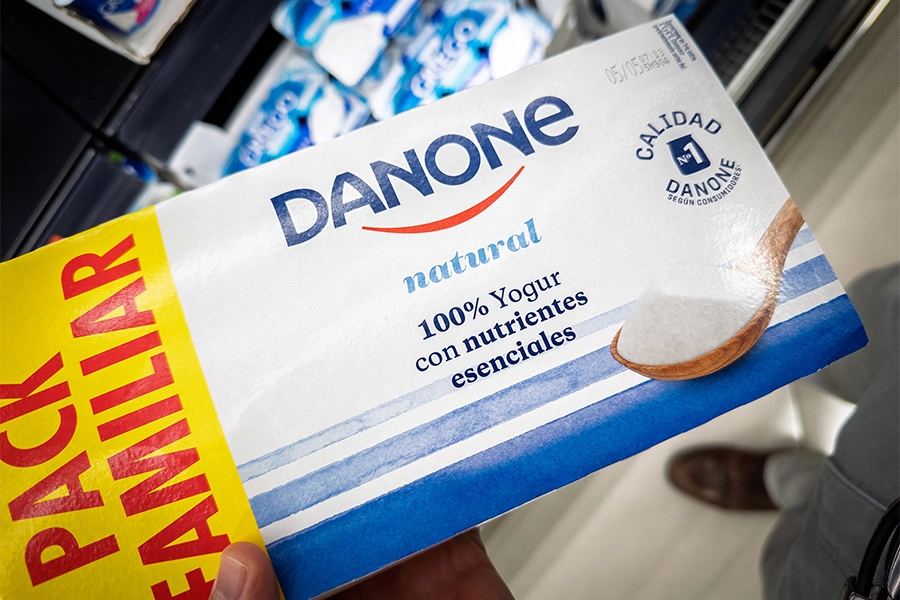 anone’s acquisition of Huel marks a major move from traditional dairy to plant-based, complete nutrition.
Platform versus product
Huel’s products — shake powders, plant-based ready meals, nutrition bars, and health drinks — are framed as an optimized nutrition system, not just a meal replacement or everyday food.
The digital-first brand has been backed by a strong online community and supported by a subscriber model since it was founded in 2014. Over the years, it has received attention from high-profile investors, carefully choosing collaborations with household names who genuinely use the product and are considered forward-thinking consumers embodying health, performance, and endurance — all pillars of Huel’s core identity.
Unlike traditional FMCG brands, Huel has built its growth through a direct-to-consumer model. These capabilities add another layer of appeal as retail channels become more competitive and data ownership becomes a greater strategic advantage.
Accelerating convergence of food, health & tech
Huel’s fast-paced notoriety can be partly attributed to the lifestyle marketing that has always accompanied it. Not just a nutritional drink, Huel is promoted as “Human Fuel,” a modern solution for time-poor, high-performance, health-conscious, and eco-aware consumers.
The complete nutrition segment was once the home of gamers, biohackers, and fitness, but is evolving into the mass functional food space — where food converges with nutrition science and convenience.
Through its partnership with Danone, Huel gains the infrastructure, distribution network, and R&D capabilities to expand further into new markets and reach more consumers, as the demand for convenient, complete nutrition continues to rise.
“What Huel has achieved in the fast-growing complete nutrition space fully resonates with Danone’s mission of delivering health through food,” says Danone CEO Antoine de Saint-Affrique.
“Combining its range and best-in-class digital capabilities with Danone’s global reach, and deep nutritional expertise, offers exciting opportunities into the new and fast-growing nutritionally complete space, in line with our ‘Renew Danone’ strategy. We look forward to learning from one another and unlocking new opportunities and growth for both businesses.”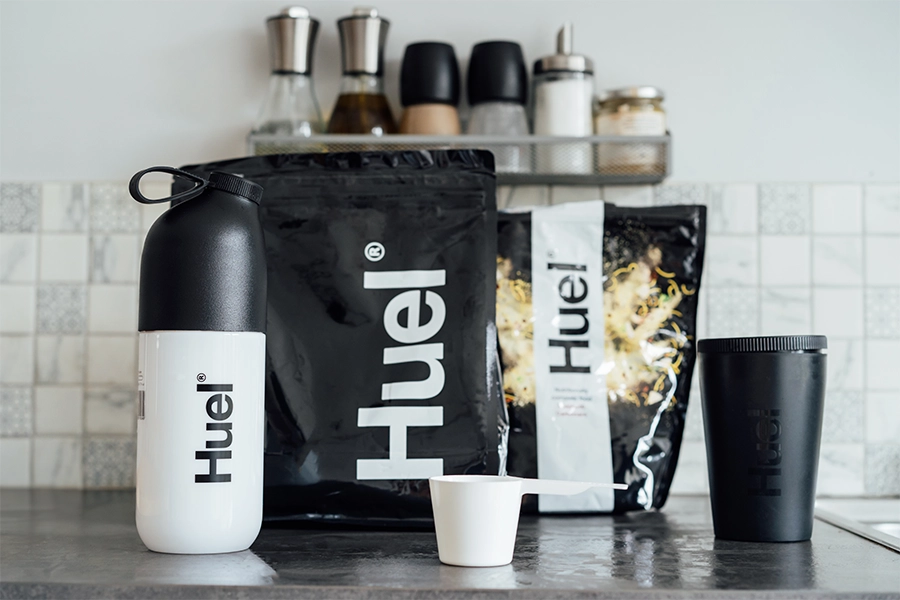 Huel’s strong digital presence and direct-to-consumer model align with Danone’s focus on functional nutrition.
What the deal means for competitors
Huel doesn’t just compete with food brands — it competes with how consumers structure eating altogether. At the same time, this acquisition puts strategic pressure on other global players, such as Nestlé, Unilever, and PepsiCo, to match Danone’s ambitions.
Nestlé is already strong in nutrition, but weaker in digital, direct-to-consumer brands.
Unilever is experimenting with functional foods, but lacks a Huel-like platform, and PepsiCo owns protein brands, but remains focused on more traditional formats.
How competitors will respond remains to be seen. But with complete nutrition being a centerpiece of future food, there are mammoth opportunities for developing meal replacement powders, ready-to-drink shakes, protein snacks, and supplements designed to cover multiple daily eating occasions.
A potential land grab for “complete nutrition” brands may be on the horizon.
Pushback against Huel
Huel is backed by entrepreneur and podcaster Steven Bartlett, who has been promoting the British meal supplement maker for years on his well-known podcast, The Secret Diary of a CEO. He bought shares in the company alongside other notable investors, including actor Idris Elba and broadcaster Jonathan Ross.
Huel’s journey has not always been smooth. The company has faced several public, legal, and regulatory setbacks over the years. The UK Advertising Standards Authority has banned multiple Huel advertisements for being “misleading” over health and cost claims, while Bartlett faced scrutiny for failing to disclose his role as director and investor in the firm.
Despite these setbacks, Huel has emerged as a key strategic target for Danone, a global leader in dairy, plant-based products, and specialized nutrition.
What’s next for Huel?
Danone’s acquisition marks a moment when “complete nutrition” moves from the margins to the mainstream, while showing how the future of food centers around systems that optimize how people live.
“We’ve grown into an omnichannel business with a strong direct-to-consumer foundation, and an expanding international footprint. At the center of it all is a loyal customer base. Most people don’t get enough protein, fiber, or the right nutrients. That’s the problem Huel exists to solve,” says Huel CEO James McMaster.
“With Danone, we will now have the infrastructure, distribution, and R&D capability to go further, into new markets and to more people, as demand for convenient, complete nutrition continues to grow.”
The deal is subject to the customary closing conditions.