

California food safety bill poised to overhaul chemical regulations

Key takeaways
- AB 2034 aims to reform food chemical safety in California by requiring companies to demonstrate the safety of additives to state authorities.
- Health advocacy groups support the bill, but industry groups have historically opposed stricter GRAS reforms.
- The bill could have nationwide implications, potentially influencing food chemical regulation and transparency.

A bill introduced this week in the US California State Assembly, which could reform food chemical safety regulation in the state, is set to divide consumer health advocacy groups and F&B and chemical industry associations.
The Center for Science in the Public Interest (CSPI), which has sponsored the bill, says the legislation would dramatically reform food chemicals regulation in the state, giving health officials a new mandate to independently review the safety of potentially harmful additives widely used in packaged foods.
“The groundbreaking bill would have national implications, given the longstanding failure of the FDA to protect consumers from unsafe and poorly tested food chemicals,” the nonprofit said in a statement.

Introduced by Assemblymember Dawn Addis, AB 2034 challenges what CSPI calls a loophole in federal regulations allowing food and chemical companies to decide independently which food chemicals are Generally Recognized As Safe (GRAS), and add them to products without informing the FDA.
Under the new legislation, companies would be required to provide evidence to the California Department of Public Health (CDPH) showing that any food chemical introduced after 1958 that has not undergone an FDA pre-market review is safe. CDPH will post those notices in a public database, allowing the FDA, researchers, and the public access to independently review the safety of these chemicals.
Major food and chemical industry groups have historically opposed stricter GRAS reforms, arguing that tighter oversight and reporting requirements could increase legal risk, compliance costs, and regulatory complexity for companies.
The Americans for Ingredient Transparency (AFIT) coalition, which was formed last year and includes industry powerhouses like PepsiCo, Coca-Cola, Nestlé, General Mills, and Tyson Foods, wants all new ingredients to go through a national, consistent process, and for the US FDA to be the only authority on ingredient safety and labeling to address conflicting state standards.
AB 2034 is in the early stages of the legislative process, meaning detailed, bill‑specific opposition statements from business groups or legislators haven’t been widely published yet. As the bill moves through committees and attracts attention from food industry stakeholders, more concrete opposition positions are likely to be articulated publicly. The bill may be heard in committee as soon as mid-March 2026.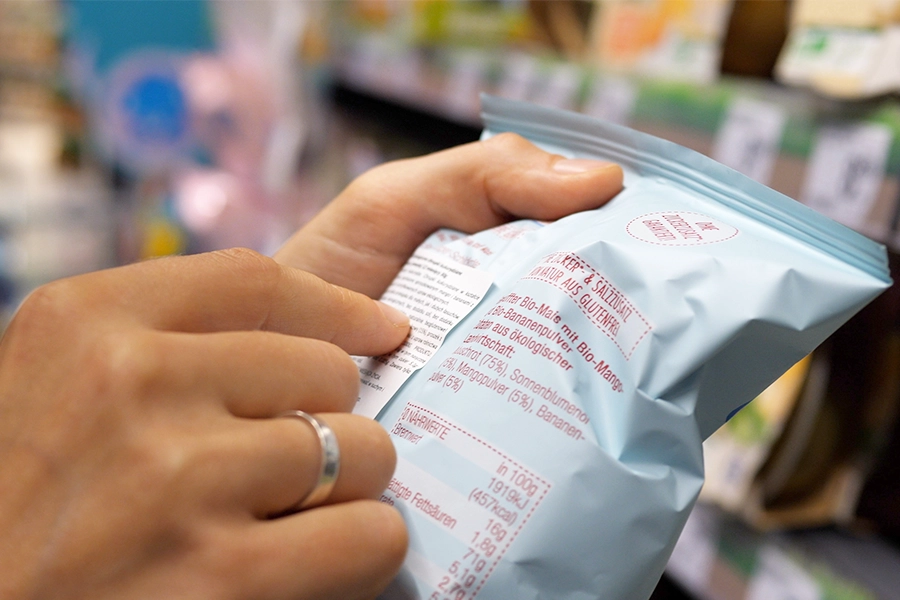 California's bill seeks to overhaul food chemical regulations by requiring companies to prove the safety of additives to state authorities.
What could California’s bill mean?
Under the new legislation, companies that currently choose not to fully disclose all ingredients on their product ingredient lists, and instead use FDA-permitted terms like “artificial flavor,” “natural flavor,” “spices,” or “artificial color,” will be required to publicly disclose those ingredients in a state database managed by CDPH.
Proponents of the bill argue that full public disclosure of ingredients, mandated under AB 2034, would help regulators gain better insight into the chemicals used in food, though critics point to potential challenges in its implementation.
Consumers who need or want to avoid certain ingredients due to allergies or religious or ethical reasons could also benefit from public disclosure, CSPI says.
CDPH would be required to review evidence on at least ten food substances on the market every three years and prohibit the use of “unsafe and poorly tested” chemicals in foods sold in California.
The legislation would also prohibit carcinogenic substances from being declared GRAS in the state.
“For far too long, consumers and FDA have been kept in the dark about the chemicals food companies use to engineer processed packaged foods,” says Thomas Galligan, CSPI principal scientist for food additives and supplements.
“While the FDA and legislators in New York and other states have proposed reforms that require greater transparency in the GRAS process, California’s bill goes further by requiring independent pre-market review by government authorities.”
“These safety reviews will not only protect Californians from poorly understood chemicals, but will surely lead food companies to choose safer ingredients across the nation.”
Nationwide GRAS reform?
US Secretary of Health and Human Services, Robert F. Kennedy Jr., advocates reforming the GRAS system, highlighting a lack of FDA oversight in food companies self-affirming ingredient safety. He argues that this loophole reduces transparency, especially for chemicals in ultra-processed foods.
Kennedy calls for a mandatory FDA notification before companies can declare an ingredient GRAS, aiming to improve regulatory oversight and public health. His focus is on closing gaps in the current system that allow potentially harmful substances to go unreviewed.
While the FDA is considering reforms to the GRAS system, Kennedy’s recent 60 Minutes appearance did not signal any immediate regulatory changes. The process of reevaluating GRAS approvals, as Kennedy suggests, will likely be gradual and involve careful assessment of existing food-grade substances.




Upcoming webinars

2027 Food Safety Risks for Quality & Compliance Leaders
FoodChain ID

Formulating for function: Developing benefit-led beverages with natural colours, botanicals, and flavours
Givaudan Sense Colour

Let's reveal the grain potential: Innovate
Meurens Natural