




IFT President: AI can transform F&B innovation, but adoption barriers block success

Key takeaways
- AI helps F&B manufacturers enhance NPD efficiency by automating tasks, speeding up R&D, and supporting formulation decisions.
- Consumer interest in AI-driven innovation is increasing, especially among Millennials, who welcome AI use in food formulation.
- Despite its potential, the F&B industry faces challenges in fully leveraging AI due to data gaps and the need for better integration across teams.
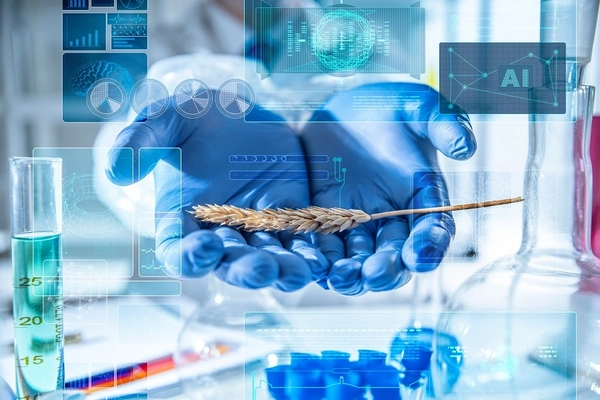
The F&B industry is undergoing a technological revolution as artificial intelligence (AI) makes significant inroads into NPD, formulation decisions, and food safety improvements. Boosting time-consuming tasks helps food manufacturers improve operational efficiency, but challenges in fully harnessing AI’s power remain.
Alleviating labor and cost issues in food production and enhancing shelf life prediction for food safety are some of the ways in which AI is helping manufacturers fast-track innovation and speed up R&D, aligning with consumers’ ever-evolving F&B demands.
Consumers are open to AI use in the F&B industry, with nearly 41% of consumers worldwide seeing potential in using the technology to develop products, according to Innova Market Insights. Millennials are most open to adopting AI in innovation, and brands are using AI to enhance consumer engagement with customized product labels and personalized video content.

Studies on AI in the food sector emphasize the need for new machine learning algorithms designed for food industry use. A recent FAO and Wageningen Food Safety Research publication reviewed 141 papers on AI in food safety, urging AI adoption to improve data collection and management, especially in resource-limited countries.
Meanwhile, curiosity about AI’s possible role in replacing humans continues, but some experts maintain that although AI can enhance a food scientist’s expertise, it cannot eradicate human involvement altogether.
Food Ingredients First sits down with the Institute of Food Technologists’ (IFT) president, Peggy Poole, to discuss AI’s tangible benefits, limitations, and where F&B companies still need to take action to better unlock the technology’s capabilities in their operations.
Where is AI already delivering real value in NPD today, and where is its impact still being overstated?
Poole: AI is allowing product developers to work faster and smarter. It can take over many of the time-consuming tasks that product developers have historically handled, freeing up their time to focus on larger challenges rather than, for example, manually analyzing data patterns or summarizing trials. Specific applications where AI can excel include identifying patterns and surfacing trends, from consumer purchasing behavior to food quality measures.
However, its impact is sometimes overstated in it replacing the role of food scientists. It should be viewed more as an extension of one’s capabilities and allowing them to move faster, rather than removing their value. AI can also be valuable for pulling together the resources and information product developers need by bringing relevant data, research, and references into one place more efficiently than traditional searches.
However, there is a significant amount of misinformation available, and without carefully restricting the scope of what an AI system can access, it is likely to surface sources or references that should not be relied upon. This risk is compounded if the materials it pulls reflect underlying bias.
 AI’s impact is sometimes overstated in it replacing the role of food scientists, when it should be viewed more as an extension of capabilities, says IFT president Peggy Poole.
How do you see AI changing formulation decisions around F&B taste and texture, especially for complex and multi-functional products?
Poole: Developing complex, multi-functional products requires balancing many variables at the same time, which can be difficult to evaluate simultaneously. AI can help by running scenarios against multiple desired product attributes to assess the potential implications of a formulation change before it is actually tested. This allows developers to better understand trade-offs earlier in the process. AI can also evaluate a broader range of possible solutions, from ingredient choices to processing and storage variables, helping narrow options before moving into formulation work.
What capabilities do food companies still lack internally to make effective use of AI in product development?
Poole: Many food companies lack sufficient internal training to understand the mechanisms and logic behind how AI systems work. Without this foundational understanding, individuals often struggle to use AI tools to their full potential. Additionally, there is a need for stronger employee education on data security. Without clear guidance and training, the risk of unintended data exposure or leaks increases as AI tools are more widely adopted, which can lead organizations to limit the AI tools available to employees.
In addition, companies often lack the internal capability to ensure that AI tools can communicate effectively with one another and that relevant data is actually moving between teams, systems, and stages of product development. When data is misreported or poorly connected, the value of AI insights is significantly limited.
What measures are needed to ensure AI tools in food safety remain transparent, reliable, and scientifically sound?
Poole: AI can take large, complex datasets and analyze them for patterns that are difficult to detect through traditional methods. In food safety applications, this allows AI to identify when processes are trending toward a control limit before an unacceptable data point is reached, supporting earlier intervention in quality monitoring and risk management.
It is important to keep a human in the loop when it comes to working with AI. AI is only as good as the data it has been trained on, so careful consideration of the resources that train the AI, the biases that could be introduced, and the raw data being input is important to maintain the reliability of the output. A knowledgeable scientist should be working with the AI and reviewing these factors, as well as the output. AI must be viewed as a tool for scientists, not automatically trusted.
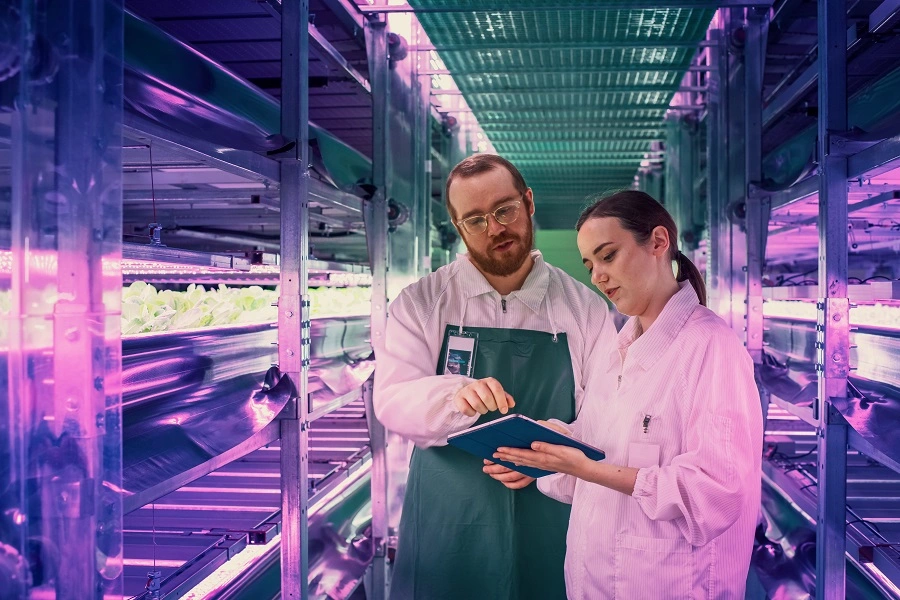 Food companies need sufficient internal training to understand the mechanisms and logic behind how AI systems work.
Looking ahead, what will distinguish companies that use AI effectively in product development and food safety from those that don’t?
Poole: Companies that use AI well will move faster in both development and problem-solving. They’ll be able to outpace competitors by quickly pulling relevant resources to support product developers, reducing the number of iterations needed, and analyzing data sets to identify patterns much more efficiently.
Looking ahead, there’s an opportunity for AI to not only improve product scale-up to save commercialization time and cost, but also automate many of the administrative and time-intensive tasks within the product development process. Companies that use this increased capacity to focus on elevating company culture, connecting with consumers, retaining talent, and empowering their teams to be bold innovators will be the ones who set themselves apart.