
Banner featuring Angel Yeast logo with images of prepared savory meals
Home
Videos
Progress in Sustaina...

Progress in Sustainable Palm Oil

25 Feb 2015 | Loders Croklaan

IOI Loders Croklaan recently introduced a new and strengthened Sustainable Palm Oil Policy, which supersedes its existing policy and further ensures:
1. No deforestation through the conservation of High Carbon Stock (HCS) forests and the protection of peat areas regardless of the depth;
2. Building a traceable and transparent supply chain;
3. Respecting the rights of employees, indigenous peoples and local communities;
4. Increased focus on driving beneficial economic change and ensuring a positive social impact on people and communities.
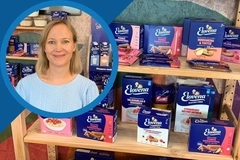

This is Rob Wires at the ISM in Cologne, and I'm here with Laura de Creuser from Lotus Crookland and Lotus Crookland are highlighting some of their sustainability around palm oil.

Laura, can you update us a bit on your progress and what some of your upcoming targets are?

Yeah, last year has been a very important year for sustainability and traceability within our supply chain.

That's one of the reasons why we introduced our new sustainable policy.

In this palm oil policy, we, commit to several statements.

One of them is transparent supply chain.

Transparent means traceable until plantation mills, and we have the ambition to be, fully traceable until the plantation in 2018.

And this we all state in our policy because sustainability is one of our most important targets for 2015 and beyond.

OK.

Where are some of the ways that you can optimize the process in order to become more sustainable?

Of course, it's very important that we know the situations on the plantations and in the mills, so up to our supply chains that we can see how the situation is in the environment and the social issues and all the workers.

So the workers have a fair lo, everything like this, that we have no deforestation, that we know the situation in the mills and at the plantations.

The social issues you can focus on.

Because there's a lot of moves within the industry towards declaring palm oil free and so forth.

What does the palm oil sector have to do in order to change some of those perceptions around the image of palm oil?

Of course we totally work together with NGOs, with the most important NGOs, to see where we can optimize our supply chain, and we report this to the NGOs and the markets that we can see that show that we have.

We have the correct actions to to solve any issues if they are there, and we have listed our mills so that we know where the, the palm oil comes from and that we know the situation around those palm oil mills.

So yeah, be fully transparent is one of our main goals.

Are there upcoming new sources, new new Regions to look towards for sourcing.

Currently we of course source from Malaysia and Indonesia.

So these are the main, main sourcing units where we have been working.

But of course you can imagine that South America is quite new as , Africa.

So yeah, we look into this, but yeah, we have to deal with all the situations around the world.

Laura, thank you very much.

More videos

Image