



A banner featuring a sample box and dried vegetables
Home
Videos
B & D Industrial: Pr...

B & D Industrial: Precision, efficiency and data integration are crucial to maintaining high-quality production standards

26 Jul 2024 | B & D Industrial

John Finnigan discusses OptiPro, which provides F&B businesses with a seamless solution by integrating with the manufacturer’s production line management tool to create valuable visual dashboards, reporting data to a SQL database for comprehensive monitoring and analysis. Find out how OptiPro tracks, translates and optimizes the production process. 
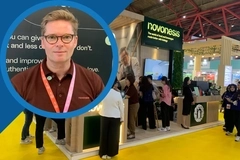
I'm Gaynor Selby.

I'm the senior editor of Food Ingredients First.

I'm joined today by John Finnegan, who's the group manager of B&D Industrial Enterprises.

So John, please summarize what the company does and how it helps beverage manufacturers in particular, monitor and analyze production line data.

The B&D Industrial Enterprises is a conglomerate of technologies and businesses 75-year history, in the automation space, in the powertrain and transmission and gearbox repair.

Those are kind of the three main, mainline pieces of our business.

In the IIOT Group of which this product we're speaking about flows, OptiPro.

Is a product that track, tracks, excuse me, translates and optimizes.

The production process within a particular facility, and namely one of our main verticals is the food and beverage space.

Right, so tell us a little bit more about what OptiPro does and how it can help manufacturers.

OptiPro is a SAS-based platform, so it resides on your local computer hardware and then it reports to the cloud.

It does not take customized programming.

The user is able to attach that to their, to, to link to their device from an Ethernet, from a Wi Fi, from a PLC protocol.

Those are the three main ways to connect the system.

Once that device is connected, then the reporting of that particular device, the outcomes of those devices, one main application is the industrial weighing or metering world.

So, scale processes and food and beverage are important.

The outcomes of what's happening on those, those outcomes then flow across the platform to a cloud-based infrastructure.

OK, and I understand that it, it's really sort of easy to use and easy for companies to navigate.

Tell us why that's important and how it replaces what you might describe as outdated systems.

It is indeed.

I think there's a couple of things that, that bring advantages that OptiPro brings advantages to.

Number one, a lot of archaic processes exist in the food and beverage space.

Margins are very thin, operating margins are very thin.

The, the systems that work in those environments are tried and true and proven, but the data, the collection of those data takes a lot of human interaction.

That human interaction adds cost, brings down efficiency, introduces errors, right?

And OptiPro, with a low technical lift allows you to network an existing device and look at that device remotely and what's happening with that device.

And then you can track the information on that device.

We use the word translate.

That's an individual decision to that particular business, but that device is doing something.

When you see what's happening on that device, you can translate that into the optimization side of what the platform brings for your particular business.

One of the more popular consumer products in the world, at least in, in the North American space, is a ring camera device.

This operates very similarly.

Ring is a local device that you install your local network, and then through the connectivity and technology from a browser perspective, you can look at your front door.

This operates in almost a very similar manner.

OK, so kind of like give us an example of how it actually works, say, within the beverage space.

So, in a particular beverage application, there's a manufacturer, prominent manufacturer of a carbonated beverage in the United States, or global too, but in the United States, they manufacture what they call the base of the product in a particular facility.

And that facility, they're making liquids and powders across 34 different applications.

And those processes are watched and looked at on a remote basis.

OptiPro helps them see that from statistical process controlling.

It also allows that data to flow into a SQL database up into their SAP system for full quality management.

In electronic or what they call EQMS type applications.

Those scales are filling liquids.

Those scales are measuring pulverized powders.

Those applications are happening in a couple of different ways, as as the connect.

Activity to those devices are happening in a couple of different manners.

Some of those scales are Ethernet connected.

Some of the scales are Wi Fi connected because the production process migrates sometimes around that floor.

And then, thirdly, some of those scales are actually managed through a very typical process for programmable logic controlling, PLC controlling.

And so, those scales are actually listening to a PLC device as, as liquid fills and says, I've reached a, a, a weight of X, right?

The PLC tells that process to halt, and then the scale speaks to the PLC and says, OK, I did reach X, right?

So that's, that's what's happening in a, in a in a traditional beverage environment.

I see.

OK, so, is this just available in the North American, space, or, you know, are you rolling it out globally?

Not at all.

It's capable on a global perspective.

BND's, corporate headquarters is in Atlanta, Georgia, so we've got, a concentration of customers in the food and beverage space.

We've got a lot of customers that are, that are utilizing it in the United States space, but certainly there's no limitation to it.

You can, you can migrate from, Imperial to metric.

We can translate language, all those kinds of things are capable.

I see.

And how long has it been on the market for now and what's the sort of feedback that you, that you get from your customers?

So there were some initial workings of, of this product that have gone back 10 years inside B&D.

We did it on a discrete basis with only industrial scales, and we did it on an, on an enterprise basis within an individual customer.

We've taken some of that baseline ideology, taken the cloud architecture to it.

That has been about 24 months in the making.

So some of the initial installs now would be cycling through the end of 2 years.

I see.

And is there any particular, do you have to sort of enhance it in any way?

Is this something that you'll be doing in the future, expanding it from, from the product perspective, because it's cloud-based, we put feature enhancement to it and just release that on an ongoing basis.

It's a subscription-based model, a platform from the, from the hardware perspective, I think one of the distinct advantages exists there from the customer standpoint.

There's a low lift to integrate OptiPro.

You do not need to upgrade your devices.

In a lot of cases, some of the systems that are running in these facilities are not Ethernet capable, but you can take serial to Ethernet conversion and then network from there, which says to the traditional business consumer, I do not need to update my hardware.

So from a hardware perspective, we found almost all hardware.

Capable in some manner of being connected.

One of the challenges in the IOT spaces, lots of, lots of equipment is now being made, that you can speak to that equipment.

The downside is that all those equipment speak individual languages.

In the scale world, specifically industrial scale world as an example, in the United States space, there are no less than 5 or 6 very prominent scale manufacturers.

All those scale manufacturers make a way to speak to their scale, but they do not make a way to speak to someone else's scale.

OptiPro is agnostic in that manner that it will speak to all of those scales.

I see, I think sometimes with production lines, companies can be put off, for want of a better word, if things don't get integrated into their own hardware systems, as you say.

So that's a real unique selling point for you guys.

It is indeed.

I think one of the disadvantages from an operational standpoint is how many different ways you can speak to, then you actually have to manage a way to collect all of the speaking that are happening inside your facility.

So, OptiPro intends to bolt into and move alongside a lot of systems, as I mentioned, the specific facility that's, that's making the base of the products.

OptiPro is doing two things.

It's actually allowing their operational leaders to look at the data through the OptiPro system from a cloud perspective, but the data is also flowing through a SQL database into their EQMS system, which is SAP-based.

So, they're looking at that data two ways, and they're, and they're allowing two different audiences within that facility to see the outcome of that data and play alongside.

SAP, which is actually their ERP system, right?

So it resides at a much higher level from the facility standpoint.

Hm.

And who are you targeting exactly?

Are you going for the big, huge clients, the, the, the big giants in F&B, or is this something for smaller businesses too?

Some of the success that we had originally came from the Fortune 100 or Fortune 10 space.

Some of that was relationships that we Piggybacked on the existence of B&D.

But the reality of one of the latest installs that we're getting ready to do is a startup ice cream or creamery business that's almost green field, right?

They have their own space in the northeast United States.

They have their own livestock, right?

And they're rearing their own milk and, and ingredients to make their actual outcome of their ice cream products.

They only have two scales.

So they're, they're what we would call, you know, Fortune, 7000, right, to put it in the perspective of the 100.

Because of that low lift, back to that ring camera analogy, this is a pretty capable product really across the spectrum for all users.

Very, very easy to install and look at and so you can immediately take the advantage of it from an individual perspective.

We have a few clients that don't integrate it across all systems either.

In some cases, this is good to look at these particular systems, but other systems are automated to a point where they use the automation and, and try to manage it that way.

So, in an individual client, in some cases, OptiPro plays to the success of their optimization in certain instances.

I see, that's interesting stuff.

Thanks very much, John, for joining me today.

Sure, thank you very much.

More videos

Image