



Ukraine: UN FAO calls for sustained investment to rebuild agri-food sector

Key takeaways
- The UN FAO has released a three-year plan calling for sustained investment to support Ukraine’s war-damaged agri-food sector.
- The plan links emergency aid with early recovery, prioritizing vulnerable farmers, restoring productive assets and land, and supporting market-oriented agriculture.
- Since 2022, the FAO support has reached over 300,000 rural families, but additional funding is needed to expand coverage.

The UN FAO has published its “Ukraine: Emergency and Early Recovery Response Plan 2026–2028,” outlining priority actions to support Ukraine’s agri-food sector, protect agricultural livelihoods, and restore productive capacity.
The FAO notes the pressures caused by the Ukraine-Russia war are particularly acute in frontline regions, where agricultural infrastructure has been damaged or destroyed, access to land is constrained by the explosive remnants of war, and producers face labor shortages and rising production costs.
Together, these factors have disrupted production cycles, limited market access, and weakened the agricultural sector’s capacity to operate beyond basic survival, the organization says.
“The war has significantly complicated the lives of Ukrainian farmers – from access to land and machinery to the ability to market their produce. At the same time, the agricultural sector remains vital to food security, employment, and economic stability in the country,” says Taras Vysotskyi, deputy minister of Economy, Environment and Agriculture of Ukraine.

“This is why, together with our partners, we are investing in the resilience of rural families and the future of Ukraine’s food systems.”
Safeguarding food production
The “Emergency and Early Recovery Response Plan” responds to these challenges through an integrated, multi-year approach that links immediate agricultural assistance with early recovery and resilience-building interventions.
The plan prioritizes safeguarding food production for vulnerable rural families and small-scale farmers, while contributing to the restoration of productive assets, supporting targeted rehabilitation of agricultural land, and strengthening pathways toward market-oriented and climate-resilient production.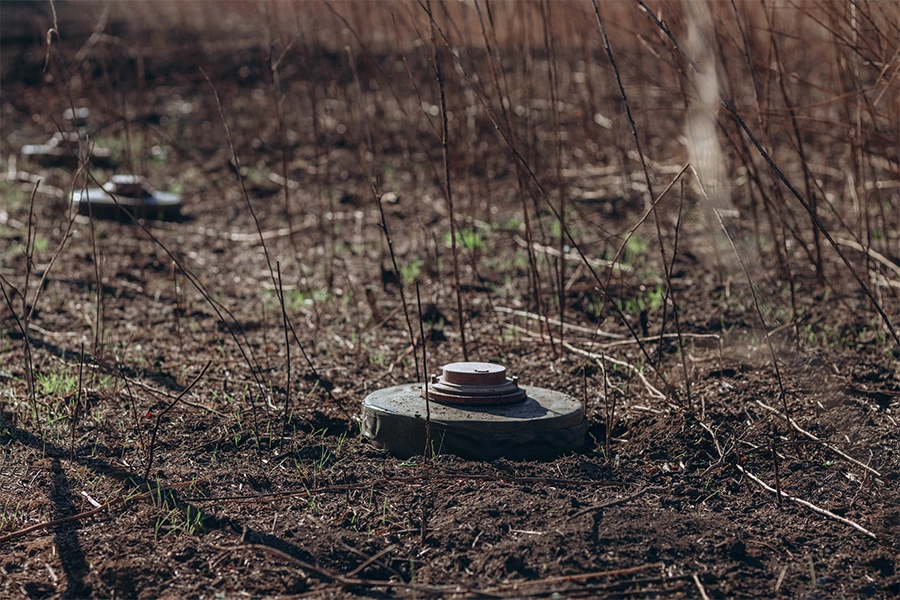 Mines have made farmland unsafe, cutting farmers off from their fields and livelihoods.
“Ukraine’s rural communities cannot afford a pause between emergency response and recovery,” says Shakhnoza Muminova, head of the FAO in Ukraine. “This Plan is designed to bridge that gap – protecting livelihoods now, restoring safe access to land, and supporting farmers and rural families to rebuild production.”
“Continued, predictable support is critical to prevent deeper losses and sustain recovery efforts over time.”
The plan is structured around three mutually reinforcing pillars: evidence and coordination, emergency agriculture, and early recovery. These pillars aim to ensure that assistance is targeted, data-driven, and aligned with national priorities, while supporting the gradual transition from humanitarian assistance toward recovery and longer-term resilience, the FAO says.
The FAO in Ukraine
Today, the FAO’s active portfolio in Ukraine amounts to US$25.9 million, of which US$24 million is dedicated to emergency and early recovery activities. Additional resources are required to expand coverage, prevent further erosion of productive capacity, and ensure that agriculture remains a foundation for recovery and long-term development, the organization says.
Since Russia’s invasion of Ukraine in 2022, the FAO says it has supported more than 300,000 rural families and nearly 17,000 small-scale agri-food enterprises. The assistance has included seeds, animal feed, poultry kits, grain storage solutions, generators, irrigation systems, cash and vouchers, and matching grants – helping communities maintain food production and livelihoods amid ongoing hostilities.
Additionally, through satellite analysis of 2.37 million hectares, the FAO says it has identified over one million craters, illustrating the scale of contamination and damage. Based on a multi-criteria prioritization process – including agricultural use, accessibility, and feasibility of clearance – 32,000 hectares were identified for mine action interventions.
To date, farmers and rural families cultivating over 22,000 hectares have reportedly received targeted support to resume agricultural activities and begin rebuilding their livelihoods.