


Spanish authorities launch African swine fever probe as country grapples with export bans

Key takeaways
- Spain launches a national investigation into a unique African swine fever strain found in Barcelona.
- Genetic sequencing shows the strain differs from others circulating in the EU, raising questions about its origin and prompting police involvement.
- Major export markets — including China, Japan, and Mexico — have imposed bans, threatening Spain’s €9B pork industry as officials work to contain the outbreak.
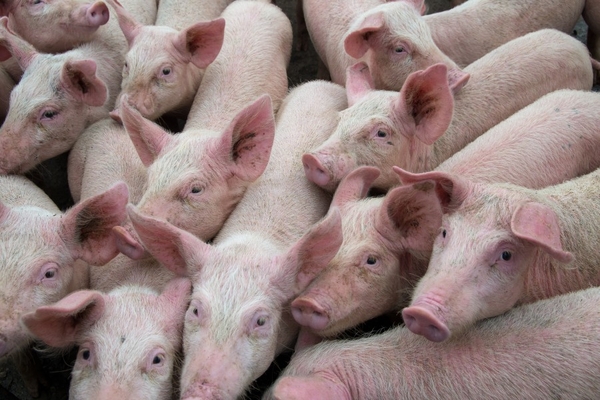
Spanish authorities have launched a new investigation into African swine fever (ASF) while ramping up support for pork exporters who are being badly hit by the disease, which was initially detected last month in the country for the first time in around three decades.
Meanwhile, the government urges police involvement to examine whether the country’s strain of the virus, believed to differ from the strain seen across other EU member states, may have originated from a research facility.
The Ministry of Agriculture, Fisheries and Food probe comes after the government received a report from the Animal Health Research Center in Madrid in the last few days, which highlights the molecular characterization by sequencing of the genome of the ASF virus and compares it with the different African swine fever viruses detected throughout the EU.

ASF has been found worldwide in recent years, including in Asia (China, Vietnam, Indonesia, the Philippines, and India), European countries, such as Italy, Poland, and the Baltic region, and several African nations.
Are genetics significant?
A Spanish government statement explains how all viruses currently circulating in EU member states belong to genetic groups 2-28 and not to the new genetic group 29, to which the virus causing the outbreak in the province of Barcelona belongs. They say this is very similar to genetic group 1 that circulated in Georgia in 2007.
“Viruses, under natural conditions, undergo changes in their genome to varying degrees when they spread through infection cycles in animals. Therefore, the discovery of a virus similar to the one that circulated in Georgia does not rule out the possibility that its origin lies in a biological containment facility,” the statement says.
“The ‘Georgia 2007’ virus strain is a ‘reference’ virus that is frequently used in experimental infections in confinement facilities to conduct virus studies or to evaluate the effectiveness of vaccines, which are currently under development.”
“The report suggests that the virus may not have originated in animals or animal products from any of the countries where the infection is currently present. Therefore, the Directorate General for Agri-food Production, Health and Animal Welfare of the Ministry of Agriculture, Fisheries and Food has initiated several actions.”
These include calling on the country’s Nature Protection Service (SEPRONA) of the Civil Guard to investigate, “as the competent authority for the investigation of possible environmental infringements or crimes.”
To date, 13 cases of ASF have been confirmed in wild boar located in the same area in Spain, all within a 6 km radius of the initial outbreak.
Export fallout
Spain, which exports almost €9 billion (US$10.5 billion) worth of pork meat and related products annually, is pushing to maintain supplies of pork as several import countries back away from Spanish pork due to the aftermath of AFS.
China is Spain’s largest importer of pig meat, but has stopped importing from the province of Barcelona following AFS detection in wild boar near the major city in late November.
Other significant markets, such as Japan and Mexico, have blocked all imports of Spanish pig meat and pork-related products. The UK and the Philippines have temporary restrictions in place.
ASF is known as a highly contagious virus that spreads quickly among pigs and wild boars but does not affect humans. For meat producers, however, it is a considerable risk, as it is almost always fatal to the animal and can lead to cullings and farm shutdowns, as well as the mounting financial impacts for farmers and export markets when bans become inevitable.
Last AFS in Spain in 1994
Spanish authorities stressed they were working to contain and eliminate the source to prevent any spread to other farms and protect the country’s meat export sector, which is already being hit by the detection of African swine fever — the first in 30 years.
Last Friday, Spain’s Ministry of Agriculture, Fisheries and Food initiated a new investigation into the origin of ASF in the nation, working to “contain, reduce and eliminate the source to prevent any spread” to farms, while seeking to mitigate the negative impact on exports.