




Pythag Tech CEO on using AI to tackle cultivated meat’s cost and scale barriers

Key takeaways
- Pythag Tech raises US$4.25 million to expand AI-driven research and reduce cultivated meat production costs.
- Generative AI and machine learning target growth media, cell line development, and bioprocessing to improve production efficiency.
- CEO Sami Nabulsi identifies unit economics and production scale as key barriers to cultivated meat commercialization.
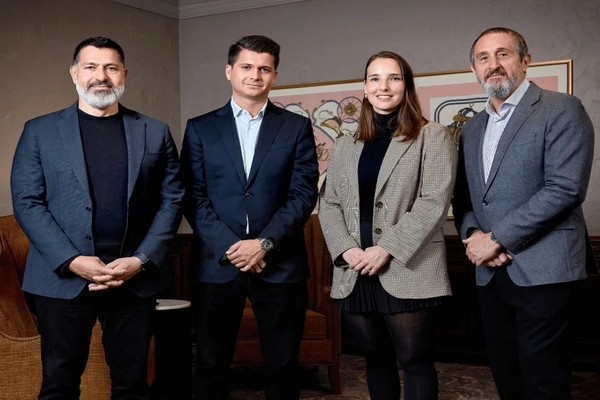
Pythag Tech, a data and technology company focused on cultivated meat, has raised US$4.25 million in seed funding and will use the investment to expand its biological dataset and develop a machine learning platform, which is designed to help food companies optimize cultivated meat production and reduce the costs associated with commercial scale up.
The company uses generative AI to guide laboratory experiments targeting three key cost drivers in cultivated meat production: growth media, cell line development, and bioprocessing. Each experiment adds to its proprietary dataset, helping the platform identify parameters that could improve production efficiency and lower costs.
Rather than producing cultivated meat itself, Pythag licenses production-process technology to food companies, aiming to address the technical and economic barriers that continue to limit the sector’s commercialization.

The funding comes as the industry seeks to make cultivated meat production more scalable and cost-competitive with conventional meat.
Food Ingredients First speaks with Sami Nabulsi, CEO of Pythag Tech, to find out more.
What does this investment enable the company to achieve, and why is this the right time to scale your technology?
Nabulsi: With the capital we now have, we’ll be scaling our work. We’ll be purchasing automation equipment and expanding our wet lab data production team, opening a second lab in Thailand alongside our current lab in Melbourne, Australia. We’ll also be building many more datasets across cells, media, and bioprocess, massively expanding on the data we already collect in each.
This investment lets us strengthen the platform so that real food companies can partner with us. As we do joint R&D, the platform should speed up discoveries and help those companies create real products. We view now as a great time. Investment is at its bottom, and technological progress has never been better. Food companies are also under real pressure on supply, with the US cattle herd at its smallest in decades and beef prices at record highs. Cultivated meat gives them another way to produce meat alongside what they already do, one that is less exposed to disease, weather, and herd cycles, and that can eventually improve their margins.
Can you explain how your generative AI platform works and what differentiates it from existing approaches to cultivated meat research and development?
Nabulsi: Cultivated meat is a high dimensional problem, and it needs cheap R&D to solve it. It’s complicated because there are many parts that affect each other, and they all have to work together in specific steps. To keep it simple, you have cells, media formulations (the nutrients that feed the cells) and bioprocesses. Cells come in many forms and from many species. Each nutrient affects the cells differently, and each one has its own cost. Bioreactors come in different shapes and sizes, with a huge number of settings that cells like and don’t like.
What we do is use computational tools on existing public datasets to generate hypotheses for the lab. This could be around molecule discovery, nutrient discovery, and so on. Then we run as many experiments as we can, with the goal of generating as much diverse data as possible, and use ML to solve for the things we’re searching for: cell viability and growth, and cost. We let the ML inform our experimentation pipeline. So far, it has driven rapid progress on a fraction of what this kind of work usually costs.
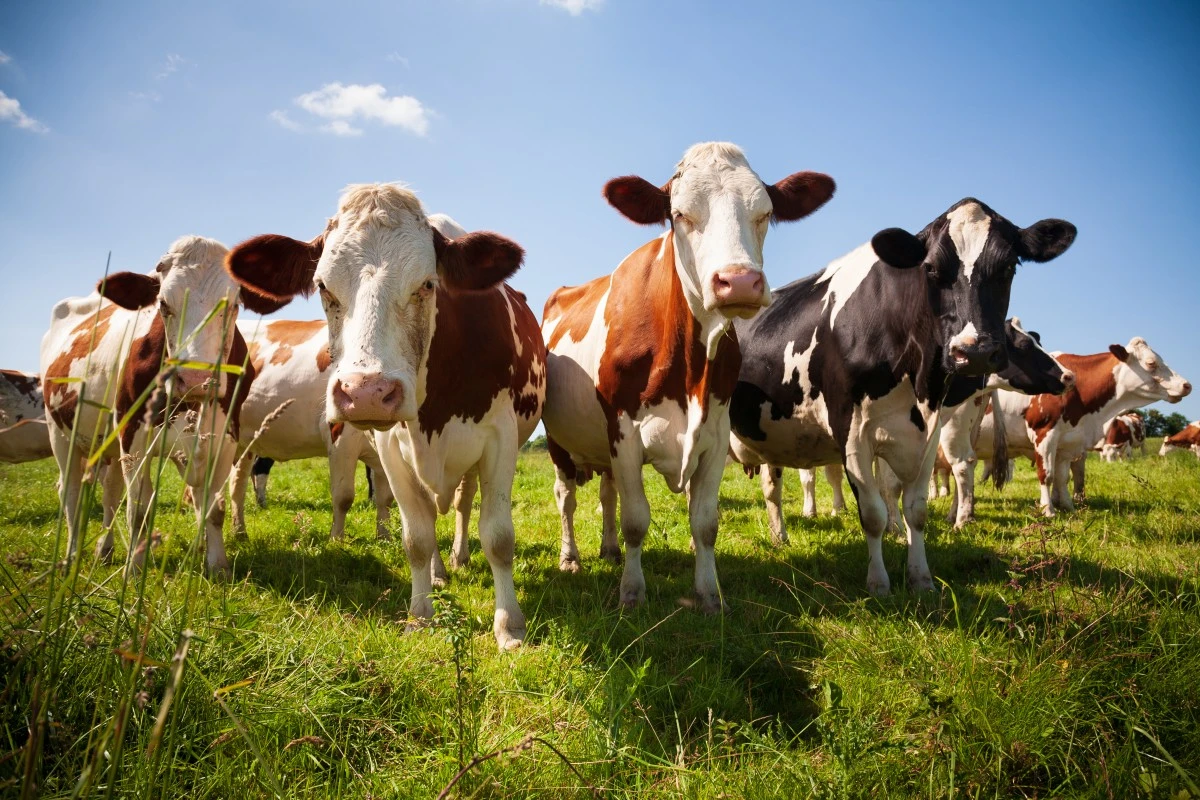 With cattle supplies tightening and beef prices rising, cultivated meat offers food companies an alternative production route that is less vulnerable to disease, climate and livestock cycles.
How does the technology address the three key cost drivers, growth media, cell line development, and bioprocessing, and what impact could it have on making cultivated meat more affordable?
Nabulsi: The three cost drivers aren’t separate problems. They depend on each other: the cells you choose change the media they need, and both change how the bioreactor has to run. ML is good at this. It can look across hundreds of experiments at once and find combinations that are both cheaper and more effective. Even if it doesn’t create the perfect solution every time, it will get you there far quicker.
In practice, that means cheaper media, cells that grow better on less, and bioprocess data collected at small scale that tells you how a process will behave at large scale before anyone has spent on a facility. Each of those takes cost out of every kilo of meat, and the platform keeps improving all three with every experiment.
Why is this data so important, and how does it give you a competitive advantage in developing more efficient production processes?
Nabulsi: We think data will play one of the most important parts in cultivated meat’s success story. It’s the best way we know to discover new processes and to optimize the ones that already exist. We also view data as a strategic tool. When we run an experiment, whatever the outcome, the data we collect has a higher return if it contributes to the larger R&D goal, which is our platform.
A failed experiment still teaches the model something. We see this as a sustainable way to do R&D, where every dataset strengthens the next piece of work rather than being filed away and forgotten. Diversity in the data matters for a similar reason. The more cell types, species, and process conditions we’ve worked with, the more bespoke the solutions we can build for a given food company and product, rather than starting from scratch each time.
 Pythag Tech uses generative AI and machine learning to optimize cell lines, growth media and bioprocessing, aiming to lower cultivated meat production costs and improve scalability.
How do you plan to work with industry partners, and what will it take for these companies to adopt your technology at commercial scale?
Nabulsi: The interest we’ve had from food companies has been in R&D deals. That’s how we plan to work with them initially. A company comes to us with a product it wants to make and the economics it needs to make it work, and we do the R&D to get there: the cells, the media, and the process, built around their constraints rather than ours. They don’t have to build a lab or hire a data team to find out whether cultivated meat can work for them. Once they’ve made a determination and when the process is ready, they manufacture it, because manufacturing, packaging, distribution, and selling meat is what they already do well.
On a commercial scale, we think the following are some of the most important aspects: The economics have to work, it has to fit what their customers actually want, and it has to solve a real problem for them and for the consumer. If any one of those is missing, no amount of enthusiasm will carry it. Rhetoric isn’t enough in the second wave of cultivated meat. This time, we have to show the public real results.
What do you see as the biggest remaining barriers to commercialization, and where can AI make the greatest difference in overcoming them?
Nabulsi: We think alternative protein will get more attention as the years go by, with pressures like the crisis in beef pricing pushing it forward. The first wave of the category struggled because of overpromising, overhyping and a misunderstanding of what consumers wanted. As second-generation companies learn from that, we think the category will be taken more seriously by food companies that want to solve real-world problems.
The biggest commercial barriers are unit economics and scale. Getting those right and cultivated meat has a genuine chance in the market. The next barrier is consumer perception, and that responsibility sits with every company making products in this space. It means being transparent and creating products that are just as healthy, if not healthier, and that taste just as good, if not better, than the ones that came before. Where ML makes the biggest difference, it’s the first two barriers. Economics and scale are R&D problems, and R&D is where data and ML cut the time and cost of getting to an answer.
How do you see Pythag shaping the cultivated meat industry over the next three to five years, and what milestones would demonstrate that your technology is helping bring commercially viable cultivated meat to market?
Nabulsi: We want to contribute to this space as a whole and work with as many companies as are willing to work with us. We’re confident that cultivated meat has a large global future.Without getting into specific technical or commercial goals, we’d be extremely happy over the next few years if a few of the food companies we’re talking to become partners. Food companies are sophisticated. They understand their markets, and they know how to spend R&D dollars. If they choose to put some of that budget into R&D in our field, we’ll see that as a huge success, both for us as a company and for cultivated meat as a whole.