



Scientists discover molecular “switch” to boost crop resilience in cold climates


Key takeaways
- Researchers identify a molecular “switch” that helps plants adapt to cold stress by rewiring their growth.
- The study reveals how cold temperatures lead to hormone signaling changes, activating genes that support survival in cold conditions.
- The findings could lead to the development of climate-resilient crops that can grow in unpredictable and harsh weather conditions.
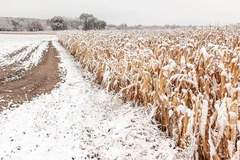
Scientists in South Korea have discovered a rapid molecular “switch” that reprograms plant growth in response to cold stress. The findings potentially unlock pathways to climate-resilient crops that can thrive under unpredictable climate conditions.
When exposed to cold temperatures, plants’ internal systems quickly adjust to help them survive. Cold stress changes the plant’s hormone signals, causing proteins like auxin/indole acetic acid repressors to break down, explain the researchers at Chonnam National University, who conducted the study.
This process allows other proteins (ARF7 and ARF19) to activate a gene CRF3, which helps the plant adapt and grow even under low temperature conditions.
“Cold stress doesn’t simply slow plant growth — it actively rewires hormone signaling to adapt root development,” says study lead professor Jungmook Kim at the Department of Bioenergy Science and Technology at the university.
“Plants survive because they integrate external stress with internal developmental programs. We have identified one of the key switches enabling that integration,” Kim adds.
The study, published in the Journal of Integrative Plant Biology, also reveals that cold activates a hormone signal (cytokinin), which helps two genes, CRF2 and CRF3, work together to adjust root growth.
Strengthening crop resilience
Innova Market Insights reports that nearly half of global consumers are highly aware of climate change’s impact on food, particularly on climate‑sensitive crops such as cocoa and coffee. This awareness reinforces the need for resilient crop technologies, such as those mentioned in this study.
Erratic weather patterns, heat, and heavy rainfall have led to price increases in fresh produce, highlighting how climate volatility threatens food security and crop supply chains. Climate change is affecting crop yields worldwide, prompting scientific efforts to make crops more heat‑resilient.
 The team expects the findings to support CRISPR-based breeding of climate-resilient crops in the future.The study’s findings could help scientists develop crops that can continue growing even in such unpredictable or harsh weather conditions. It suggests that scientists could create crops with stable root growth in cold soils by boosting CRF2/CRF3 signals or stabilizing ARF activity through the controlled breakdown of Auxin/ Indole-3-acetic acid proteins. These proteins play a key role in regulating plant growth and development.
The authors explain that such varieties would improve “early-season growth establishment, increase nutrient uptake efficiency, and support sustainable agriculture” with lower fertilizer use.
What’s next?
The researchers highlight the study’s potential for the development of what they call “synthetic molecules” or “biostimulants” that could protect seedlings during unexpected periods of extreme cold.
Over the next decade, the team expects the molecular pathway to enable crop cultivation in harsher climates and serve as a framework for precision breeding and CRISPR-based engineering of climate-resilient crops.
Researchers worldwide are currently utilizing CRISPR and other gene-editing tools to enhance the climate resilience of crops such as corn and raspberries, as well as improve disease resistance in cacao plants.