


Major food companies urge EU to ban caged animal farming


Key takeaways
- More than 30 European food companies submit statements to the EU Commission calling for cage bans on hens, sows, and rabbits.
- Industry argues that cage-free systems are commercially viable, with seven EU countries already imposing national bans, creating market fragmentation.
- Commission consultation closes December 12, with legislation expected in 2026 after missing the 2023 deadline.
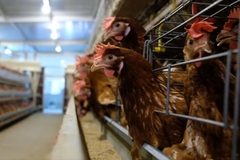
More than 30 European food companies have submitted statements to the European Commission calling for an EU-wide ban on farming cages for laying hens, pigs, and rabbits.
Three separate statements, signed by 17 companies — including Bompieri Group, Fumagalli Industria Alimentari, Coop UK, and Accor — were submitted to the commission, each focused on a different species. The companies have made voluntary commitments to remove cage systems from their supply chains.
The statements urge lawmakers to prioritize and enact legislation to ban cages for hens, sows, and rabbits throughout Europe.
The move builds on a September letter from 18 businesses, including Lidl, Sodexo, and Ferrero Group, who have already implemented cage-free supply chains for laying hens. A separate letter from nine investors representing US$383 billion in assets under management also urged the commission to prohibit cages and create a level playing field across Europe and non-EU trade.
“Companies know the future is cage-free, and this statement is a powerful endorsement of the EU’s expected legislation to phase out the use of cages in Europe,” says Vinciane Patelou, head of EU at Compassion in World Farming.
“Thanks to these trailblazers, cage-free products are becoming more mainstream, and the market is shifting, confirming that cages are not necessary in animal farming,” she says.
The companies argue that transitioning to cage-free systems is achievable and commercially viable, and that producers are ready to share practical experience to shape new legislation that phases out cages.
Currently, seven European countries have introduced national bans on cages for one or more species, resulting in market fragmentation and unfair competition among producers. An EU-wide ban would ensure a level playing field and bring legal certainty for all producers.
Public opposition to caged farming
The call comes as public participation in the commission’s consultation has surged, with more than 150,000 organizations, businesses, and citizens having submitted responses. The consultation closed on December 12.
Compassion in World Farming submitted its own response, calling for an EU-wide ban on cages for all farmed species as soon as possible, including provisions preventing lower-welfare products from entering the EU.
In the EU, almost 300 million animals are confined in cages every year, despite 94% of Europeans believing animals should have enough space to move freely and 86% supporting a full ban on cages.
The commission is now expected to propose new legislation in 2026. In 2021, following the End the Cage Age European Citizens’ Initiative supported by 1.4 million citizens and 170 NGOs, the commission pledged to propose legislation to phase out cages by 2023. However, it failed to meet its own deadline.
Food Ingredients First previously reported that animal welfare campaigners ramped up pressure on EU policymakers in February 2025 ahead of the expected 2026 policy review.
In June 2024, leading EU NGOs brought a court case against the commission for failing to deliver on its pledge to end cage farming.
Sweden’s egg sector was reported to be fully cage-free in June 2025, with industry cooperation enabling competitive pricing despite higher production costs. Meanwhile, UK retailers faced scrutiny in July 2025 over missing 2025 cage-free commitments, with chains including Asda, Lidl, and Morrisons at risk of not meeting targets.