



Edonia CEO on scaling spirulina protein for prepared foods and hybrid meat

Key takeaways
- Edonia secured €15 million to scale its spirulina protein ingredient, targeting a new French factory opening by late 2027.
- Its Edonization process transforms spirulina into tender grains for protein enrichment and meat replacement in prepared foods.
- The company targets simpler ingredient lists, processing stability, and competitive costs for food manufacturers and foodservice operators.
French start-up Edonia has secured €15 million (US$16.8 million) to scale production of Edo, its spirulina-derived protein ingredient for food manufacturers and foodservice operators. The financing will support a new production facility in France and commercial growth in Europe, Japan, and the US.
Food Ingredients First speaks with Edonia’s co-founder and CEO, Hugo Valentin, about turning spirulina into a tender, grain-like ingredient for protein enrichment and meat replacement, the formulation challenges it aims to solve, and the next steps toward industrial scale.
What will the latest funding enable Edonia to deliver, and what are the key milestones and timeline for the new production facility?
Valentin: Our new production facility in France is expected to open by the end of 2027 and reach an annual production capacity of around 2,000 tons once fully ramped up.

It will build on our first production facility in Agen, France, which already delivers tons of Edo every month to the market. The new factory is simply the logical next step. Our Edonization technology has already reached TRL 7, and we use standard food industry equipment that has already been tested at full scale.
 Hugo Valentin, co-founder and CEO at Edonia.Our main goal is to fulfill the pre-orders signed with leading food manufacturers and build a team capable of supporting our customers as they develop new products with Edo.
How does Edonization change spirulina’s flavor, color, and texture, and how much of its original nutritional profile is retained?
Valentin: Spirulina is typically known as a green powder with a strong smell and taste. Edo is a dark brown, fluffy grain with a fairly neutral, slightly umami taste and subtle grilled notes. And it changes everything. Because for the first time, microalgae can be used as the main protein source in a delicious meal. It unlocks a new food for humanity.
Our patented Edonization technology physically transforms whole spirulina biomass, reorganizing its natural components and creating a granular texture through gelation, without extracting the proteins.
Edonization preserves the quantity and quality of proteins, as well as minerals such as iron and many vitamins. Some heat-sensitive nutrients are reduced during the process, but the key nutritional benefits our customers are looking for remain (27 g of protein per 100 g, all essential amino acids and a PDCAAS of 0.97, and 30 mg of iron per 100 g.
Which food applications are best suited to Edo, and what inclusion levels can manufacturers achieve before encountering taste or texture limitations?
Valentin: Prepared meals are our sweet spot. Edo is fantastic when combined with ground beef or used to replace it in dishes like bolognese, shepherd’s pie, or chili. It’s also a real winner in all kinds of plant-based meals, such as dhal, vegetable lasagna, or salads.
Edo is also adapted for making fillings for gyoza, dumplings, ravioli, onigiri, tacos, samosas, or burritos. It’s also used to create more complex food matrices, combined with other plant-based ingredients in products like falafel, vegetable patties, quiches, or savory cakes.
Most of the time, Edo is incorporated at levels between 5–30% of the recipe. That’s often enough to achieve protein and iron nutrition claims. We’ve noticed that reaching around 19 g of protein per serving is a sweet spot for many of our customers. In practice, taste and texture are rarely the limiting factors, even at high inclusion levels. We’ve successfully replaced 100% of the ground beef in recipes served by Newrest. Some of our customers use Edo in even more creative ways: to enrich chocolate cakes or protein bars, or in a dried form as an umami-rich topping.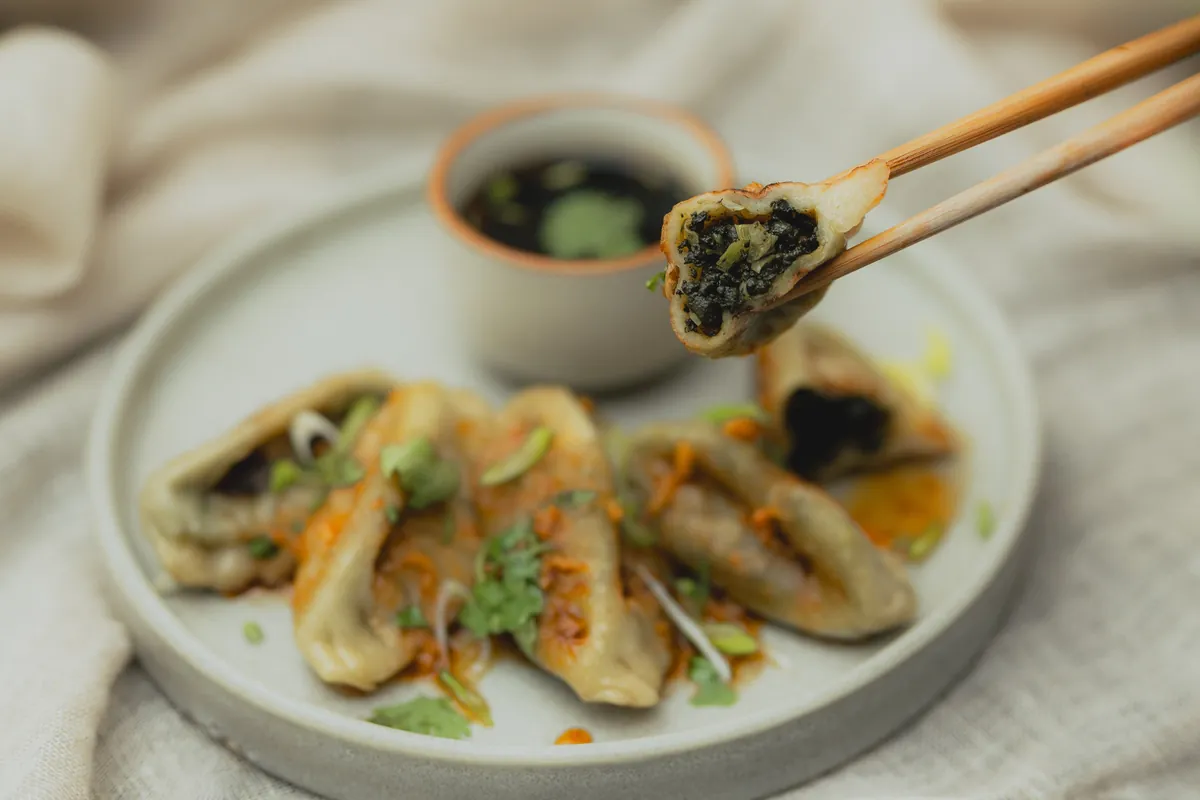 Edo has been adapted to make fillings for gyoza, dumplings, ravioli, onigiri, tacos, samosas, or burritos.
That’s our vision: Edo is a new food, not just a meat imitation. As versatile as an egg.
How does Edo perform during heating, freezing, and storage, and what formulation adjustments are needed when replacing meat, dairy, or other plant proteins?
Valentin: Edo is sold frozen (IQF — individually quick frozen). It’s completely ready to use, so you don’t need to cook, hydrate, or thaw it. You can add it directly to your preparation while frozen. It thaws very quickly, without releasing water.
Through our work with food manufacturers, we’ve demonstrated that Edo maintains its taste and texture through demanding processes such as sterilization.
When replacing meat or enriching an existing recipe, formulation adjustments are generally minimal. Manufacturers mainly need to account for Edo’s high protein density, its great taste, and its naturally fluffy texture.
What does “minimally processed” mean in practical terms for Edo, and how would manufacturers declare the ingredient on product labels?
Valentin: Edo is whole spirulina and a small amount of sunflower oil. That’s all. No protein extraction, no extrusion, no additives. Our patented Edonization process relies on physical transformations, much like traditional cooking.
We’re one of the few ready-to-eat protein ingredients to have obtained the “Ingrédients Simples” recognition from the French food-science and communications consultancy GOÛM. Our customers simply need to declare spirulina (known as a healthy superfood by the consumer) and sunflower oil on their ingredient lists. That’s a much more appealing statement than listing ingredients like “soy protein isolate,” “methylcellulose,” “mycoprotein,” or “ferrous sulfate.”
Many customers use Edo to clean up their ingredient lists. It’s especially useful in prepared meals, where many plant-based alternatives contain 6–15 ingredients.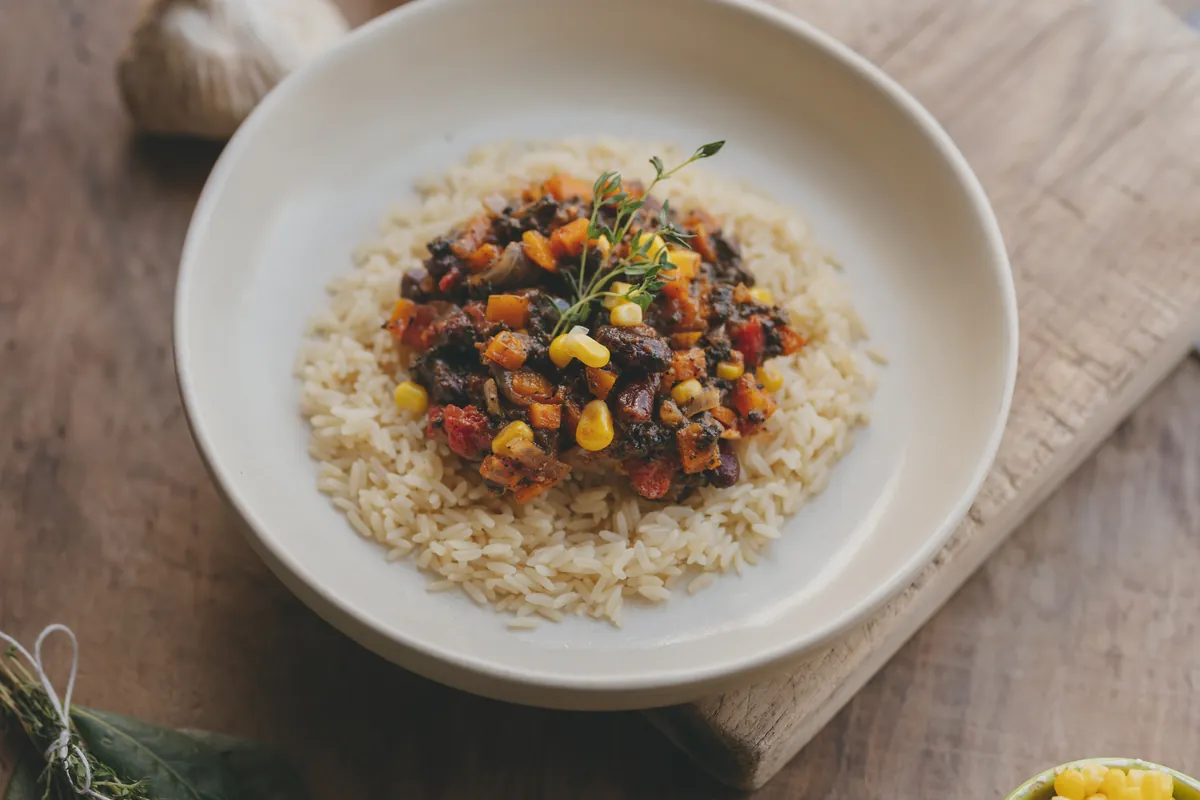 Edo can be combined with ground beef or used to replace it in dishes like bolognese, shepherd’s pie, or chili.
How will industrial scale-up affect Edo’s price, availability, and batch consistency, and which established protein ingredients are your main cost benchmarks?
Valentin: Thanks to our new factory, we’ll soon be able to produce thousands of tons of Edo per year and supply food manufacturers and services around the world. Our batches are already consistent at our pilot facility, which is how we managed to enter the market so early. This is thanks in particular to our unique expertise in sourcing and mastering microalgae biomass. And we expect consistency to improve even further as we scale up.
Our main cost benchmark is ground beef, one of the most widely used protein sources in prepared meals worldwide. We want to help create more plant-based and hybrid food offerings. We’re a purpose-driven company, and Edo has a 27 times lower carbon footprint than beef for the same amount of protein. That’s how we make an impact.
We already compete with ground beef on a cost-in-use basis. Edo is richer in protein and has no cooking loss, meaning manufacturers can use less of it to deliver the same result. And while beef prices are rising, we expect Edo’s production costs to decrease as we scale up.
That’s why Aliive (Dietbon brand) chose to develop ready meals with Edo. Forty percent naturally opted for the Edo-based version, which achieved the same satisfaction score as the 100% meat version.
I’d like to send a message of hope to all food formulators who’ve struggled to develop tasty, clean label plant-based or hybrid prepared meals. We know how tricky it is to combine a clean ingredient list, great taste, and high protein content in the same product. Edo could probably help. Over the years, we’ve built growing expertise in exactly these kinds of formulation challenges.



Upcoming webinars

2027 Food Safety Risks for Quality & Compliance Leaders
FoodChain ID

Formulating for function: Developing benefit-led beverages with natural colours, botanicals, and flavours
Givaudan Sense Colour
Let's reveal the grain potential: Innovate
Meurens Natural