



Brazilian study taps CO₂ tech to preserve hop flavors and boost beer quality

Key takeaways
- Brazilian researchers use supercritical CO2 extraction to boost hop efficiency and enhance beer quality.
- The method preserves hop terroir while reducing environmental impact, offering a greener alternative to traditional solvent-based extraction.
- The project aims to strengthen Brazil’s domestic hop supply and create new bioproducts.
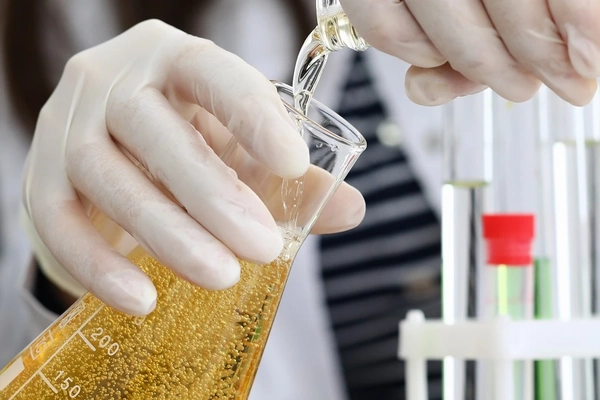
Scientists in Brazil have used supercritical extraction with carbon dioxide (CO₂), a technology that “efficiently” extracts aromatic and bioactive compounds from hops — the ingredient responsible for the bitterness, aroma, and flavor of beer. The method, already well-established in the US and Germany, leads to reduced logistics costs and up to a 20% improvement in beer quality.
The innovation comes as unfavorable weather has impacted beer quality in recent years, leading companies to explore alternatives to hops to enhance beer aroma and sustainability.
Using the supercritical extraction process could potentially make domestic hop production more efficient and viable in Brazil, which currently grows less than 1% of hops locally despite being the third-largest producer and consumer of beer worldwide.

Brazilian consumers skew above the global average for both alcoholic and non-alcoholic alternative beverages, driven by product promotions and changing taste and lifestyle in the country, reports Innova Market Insights.
The project involves Brazilian scientists and producers in the Vale do Ribeira region of the state of São Paulo, and also aims to offer producers higher-value crops with a smaller environmental footprint compared to low-value commodities like soy or sugarcane.
It began at CBioClima, a FAPESP-supported research center based at São Paulo State University (UNESP).
 Brazil is the world's third largest beer producer and consumer, but grows less than 1% of the hops it consumes.“Brazilian hops are normally sold in pellets [dehydrated and pressed flowers] to breweries. However, with this technology, hops can be marketed in oil form, which, in addition to logistical gains, yields beer production results that are far superior to conventional methods,” says Levi Pompermayer Machado, a professor at UNESP and one of the researchers involved in the project.
Preserving hop “terroir”
The findings, published in Biomass Conversion and Biorefinery, show that when the researchers compared the extraction of hops using conventional and supercritical CO₂ methods, the latter yielded better results.
“While traditional extraction, which uses organic solvents or a technique known as steam stripping, yields about 15% extract with 9% α-acids (the compounds responsible for the bitterness of beer), the CO₂ method achieves up to 72% α-acids,” note the authors.
Sensory analysis showed that hops’ “terroir” characteristics are preserved, even with improved extraction performance.
“Each hop has a unique flavor, which is defined by what we call terroir, and that’s what the industry is looking for. In the study, we also conducted analyses of the sensory profile of the hop extract in pellets and the extract we produced,” Machado explains.
“There was a slight change in flavor, but the sensory signature of the product remained more or less the same. Therefore, with all this improvement in efficiency and quality, the characteristics of the terroir are almost entirely maintained.”
Advancing “green chemistry”
Machado points out that the supercritical extraction method using CO₂, tested in the Vale do Ribeira region, follows the principles of “green chemistry.”
The technique uses CO₂ rather than water or petroleum solvents to separate essential oils from hops. Under high-pressure, high-temperature conditions, CO₂ exists in a state between liquid and gas, a state the authors describe as “the supercritical state.”
In this state, the gas acts as a natural solvent and penetrates deeply into the raw material, efficiently extracting its compounds.
“In addition, the CO₂ used in supercritical technology is recaptured at the end of the process, which avoids atmospheric emissions and eliminates chemical residues in the extract. This makes the method more efficient and environmentally responsible,” adds Machado.
The approach also supports the development of a circular economy in the region.
Johana Marcela Concha Obando, a postdoctoral fellow at INCT NanoAgro at UNESP, who is involved in the project, notes that hop waste still contains bioactive compounds with high antioxidant potential, including phenolics and flavonoids.
“Since the technique doesn’t use reagents, this waste isn’t lost in the process and can be used for other purposes,” she explains.
Beyond brewing, the leftover biomass, known as “spent hops,” can be used in cosmetics, pharmaceuticals, and other sectors that utilize bioactive ingredients.
 Hop oil made with CO₂ tech delivers superior brewing results compared to pellets.