



UK arable farmers face £2.3B cumulative losses as extreme weather reshapes ingredient supply

Key takeaways
- UK arable farmers face £828 million (US$1.1 billion) losses from the 2025 drought, part of £2.3 billion (US$3.1 billion) cumulative extreme weather losses this decade.
- Oilseed rape down 38% and milling wheat down 20%, forcing ingredient buyers to reconsider domestic sourcing strategies.
- Unlike 2024, normal commodity prices mean reduced yields translate directly into lost income for farmers and manufacturers.
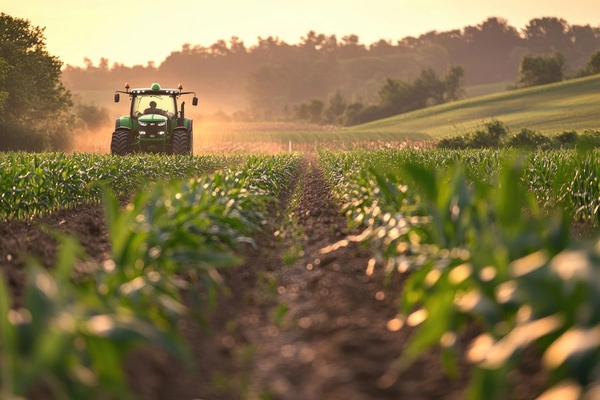
UK farmers growing wheat, barley, oats, and oilseed rape face an estimated £828 million (US$1.1 billion) revenue hit from this year’s harvest due to record heat and drought, according to analysis by the Energy & Climate Intelligence Unit (ECIU). Combined with similar weather-driven shortfalls in 2020 and 2024, the cumulative financial impact across three harvests this decade reaches £2.3 billion (US$3.1 billion).
The findings highlight a pattern of climate volatility that’s forcing food manufacturers to reconsider UK ingredient sourcing strategies as domestic production reliability declines.
The 2025 harvest is set to generate £3.37 billion (US$4.5 billion) in revenue at current prices, representing a 19.7% decline compared to the decade average of £4.2 billion (US$5.6 billion), the ECIU analysis shows.

This follows two previous weather-related harvest failures in 2020 and 2024, creating what the organization describes as a new operating environment for UK ingredient buyers rather than isolated anomalies.
This year’s shortfall stems from the hottest spring and summer on record in the UK and the driest spring in England for over 100 years, which severely impacted crop development. Output estimates show oilseed rape facing the steepest drop at 38.4% below historical norms, followed by milling wheat down 19.6%, feed wheat down 16.1%, and malting barley down 15.9%.
The pattern represents three of England’s five worst harvests on record, occurring in the 2020s, with severe rainfall in 2019-20 and 2023-24, followed by this year’s drought. Unlike 2024, when elevated commodity prices following Russia’s invasion of Ukraine partially offset reduced yields, 2025’s harvest coincides with prices around historical averages for most crops, meaning smaller volumes translate directly into diminished income.
Supply chain implications
The analysis carries particular significance for UK-based ingredient manufacturers reliant on homegrown supply. With nearly half of UK consumers actively seeking locally sourced ingredients on products, according to Innova Market Insights consumer trends data, the supply crunch creates a potential gap between consumer expectations and what producers can deliver from British sources.
Oilseed rape’s 38% output decline poses immediate challenges for UK rapeseed oil manufacturing, potentially forcing food companies to reformulate products or increase imports. The crop is forecast to reach just 0.8 million metric tons this year, generating £359 million (US$477 million) in revenue compared to historical benchmarks.
Wheat faces similar pressure across both milling and feed categories. Milling wheat, critical for flour mills and bakery ingredients, is estimated at 5.01 million metric tons, generating £875 million (US$1.16 billion), while feed wheat stands at 6.29 million tons worth £1.05 billion (US$1.4 billion). Combined, these represent substantial shortfalls for UK food manufacturing operations.
The malting barley sector, essential for brewing and distilling operations, faces a 15.9% drop with output estimated at 2.1 million tons generating £337 million (US$448 million). This impacts both craft brewing operations and whisky makers, sectors that frequently market UK or regional sourcing credentials.
Pricing paradox
The analysis highlights a critical difference between 2024’s poor harvest and 2025’s expected results. While both years saw significantly reduced volumes, 2024’s shortfall was partially cushioned by commodity prices that remained elevated following geopolitical disruptions to global grain markets. Those price supports have now largely dissipated, leaving farmers and downstream buyers facing both volume and value pressure simultaneously.
The ECIU used per-hectare yield figures for England combined with 2025 crop area data from the Agriculture and Horticulture Development Board to generate UK output projections. The organization applied October 2025 ex-farm prices to calculate potential revenue, acknowledging that most farmers sell forward or hold back portions of crops rather than selling entire harvests at post-harvest prices.
Total UK cereal and oilseed output for 2025 is projected at 19.37 million metric tons across wheat, barley, oats, and oilseed rape. The methodology produced figures broadly aligned with official Total Income from Farming data when applied retrospectively to previous years, suggesting the approach provides reliable indicators of revenue impact.
Official UK figures from Defra are scheduled for release next week, which will provide definitive numbers for the 2025 harvest. The department has already published initial cereal and oilseed estimates for England, showing the anticipated sharp declines.
Forward implications
The £2.3 billion (US$3.1 billion) cumulative impact across 2020, 2024, and 2025 suggests UK arable agriculture is experiencing systemic climate volatility rather than occasional bad years. For ingredient buyers and food manufacturers, this raises questions about long-term sourcing strategies and the viability of “British-sourced” product positioning in categories heavily reliant on a consistent UK supply.
The pattern also carries implications for UK food security and import dependency. As homegrown supply becomes less reliable, manufacturers may need to build more diverse geographic sourcing into supply chains, potentially at odds with sustainability goals around reducing food miles and supporting British agriculture.
Current ex-farm prices show per metric ton prices for milling wheat at £174.8 (US$232), feed wheat at £167 (US$222), malting barley at £161.2 (US$214), and feed barley at £142 (US$189). Oilseed rape delivered prices stand at £427 (US$568) per metric ton, reflecting tight market conditions but insufficient to offset the shortfall’s revenue impact.