

K-food research reveals how to boost kokumi flavor acceptance


Key takeaways
- The study found that MSG significantly enhances umami and kokumi, leading to higher consumer acceptance, while nucleotide-based seasonings mainly boost umami alone.
- The researchers showed that umami is a key driver of kokumi perception, shaping depth, richness, and lingering taste in fermented foods like doenjang soup.
- The findings offer practical guidance for improving flavor harmony, reducing sodium without sacrificing taste, and developing premium fermented and savory products.
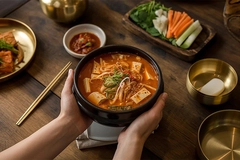
A new study could help unlock better recipe development and product formulation in traditional fermented foods like Doenjang soup as the international K-food craze gathers pace.
Researchers at Jeonbuk National University in South Korea explored the impact of different seasonings on the flavor perception of Doenjang soup and found that certain ingredients enhance overall flavor harmony, while others intensify specific flavor notes like umami or saltiness, influencing consumer acceptance.
Doenjang is a traditional Korean fermented soybean paste containing natural umami and kokumi-active compounds. The soup is a widely consumed staple in Korean cuisine, and its flavor varies dramatically with seasoning choices.
Beyond doenjang, this research offers broader insights into how kokumi can be enhanced in many kokumi-rich foods found around the world, such as aged cheeses, long-simmered broths, miso, soy sauce, parmesan, and certain seafood-based dishes.
Doenjang flavor perceptions
The study found that monosodium glutamate (MSG) and nucleotide-based seasonings affect doenjang soup differently. Nucleotides mainly boost umami, while MSG strongly enhances both umami and kokumi, resulting in higher consumer acceptance.
The K-Food Research Center team applied a consumer-centered approach, using 113 untrained panelists who completed liking assessments and Check-All-That-Apply questions after testing doenjang soup samples containing different seasonings: none, 1% MSG, 1% disodium 5′-inosinate, 1% disodium 5′-guanylate, and 1% disodium 5′-ribonucleotide.
The researchers found that even within the same category of seasonings, MSG, an amino acid–based seasoning, and nucleotide-based seasonings influence doenjang soup in different ways. While MSG boosts both umami and kokumi, nucleotide-based seasonings mainly increase umami alone, showing that these two types of flavor enhancers work differently even in the same food system.
“Our results show that umami is a major sensory driver of kokumi perception — shaping how consumers experience depth, richness, and lingering flavor in doenjang soup. These insights offer a clear, evidence-based direction for formulating more impactful seasoning systems and advancing premium doenjang-based product development,” says Mina K. Kim, director of the K-Food Research Center at Jeonbuk National University.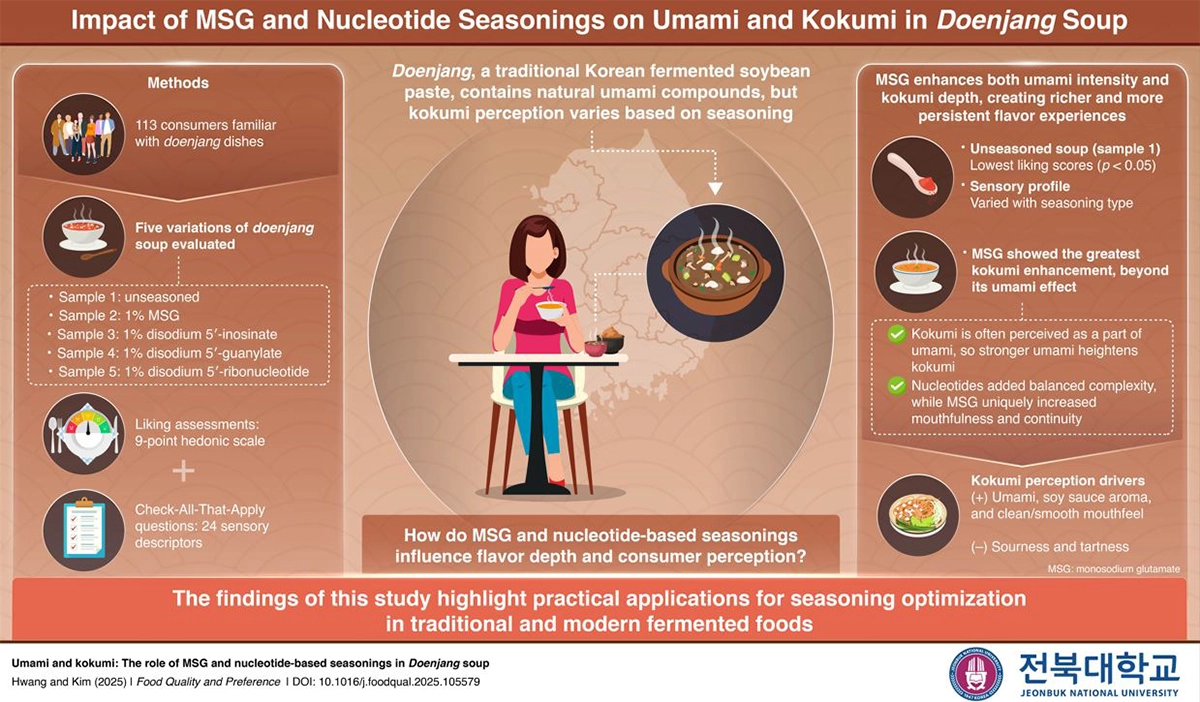
Enhancing kokumi-rich foods
Since kokumi contributes to body, richness, and lingering taste, these findings can also be applied to improving the flavor quality of soup-based products and savory beverages. Additionally, by strengthening kokumi while maintaining umami balance, this study provides a useful strategy for developing products with reduced sodium without sacrificing their taste.
“Our research can help develop fermented foods that retain the complex flavors of traditional doenjang while meeting modern consumer expectations,” says Kim. “By showing how umami and kokumi interact in consumer evaluations, our findings support flavor-standardization efforts and the creation of healthier, more satisfying fermented products.”
“As kokumi research progresses, we expect the industry to adopt more precise, evidence-based approaches to enhancing flavor depth and persistence.”
The study findings have been published in Food Quality and Preference (Volume 131).
K-food frenzy
The K-food craze is in full swing, with traditional ingredients such as kimchi and gochujang paste becoming widely available far beyond their place of origin. South Korean instant foods, such as prepackaged ramen noodles, toppoki, rice, and mandu dumplings, are also growing in popularity worldwide.
It was therefore fitting that South Korea was the official “partner country” of Anuga 2025. The trade show, held earlier this year in Cologne, Germany, attracted over 145,000 visitors and more than 8,000 exhibitors, including many of South Korea’s leading food and food ingredient companies.
Food Ingredients First spoke with South Korean F&B leaders Daesang and Samyang, and Sias, a French-based provider of Korean food technology, ingredients, and ready-to-eat products. Company experts shared insights into the factors driving the K-wave and how companies can establish Korean ingredients as enduring staples.