


EU “meaty” label ban talks collapse into prolonged regulatory limbo

Key takeaways
- Trilogue talks on plant-based meat terminology restrictions collapse without agreement, pushing the decision to 2026.
- The “No Confusion” campaign cites the lack of official impact assessment data on rebranding costs and single market fragmentation.
- Translation complexities across EU languages create legal uncertainties, with terms like “steak” applying inconsistently to fish products.
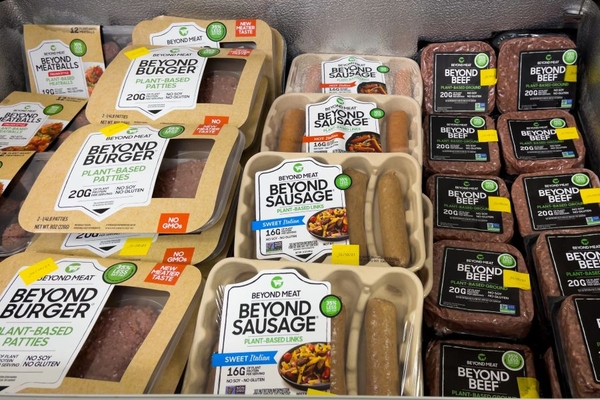
European trilogue negotiations on restricting meat-related terminology for plant-based products collapsed yesterday without agreement, pushing any final decision into 2026 under Cyprus’ EU presidency.
The failure marks a significant setback for the European Parliament’s October vote to ban terms like “burger,” “sausage,” and “steak” from plant-based labels.
That measure passed 355 to 247 but now faces an extended legislative limbo after the EU Council, Commission, and Parliament could not reconcile their positions during closed-door proposal discussions.
Rafael Pinto, senior policy manager at the European Vegetarian Union, says in a statement on behalf of the “No Confusion” campaign that the failed agreement “shows how political and legally complex this subject is,” noting that “the repercussions and unintended consequences for consumers, farmers, small businesses, and the whole food chain were not taken into account.”

The proposal, brought by French EPP MEP Céline Imart, sought to reserve meat-related names exclusively for animal products. Parliament argued the restrictions would protect farmers and prevent consumer confusion, though the European Court of Justice ruled in October 2024 that existing laws already provide adequate consumer protection.
The No Confusion Coalition, representing over 600 organizations, had mobilized heavily ahead of yesterday’s trilogue, with more than 300,000 citizens signing public petitions opposing the measure.
Missing data complicates negotiations
Pinto tells Food Ingredients First that no official studies or data have been collected by EU institutions despite the proposal’s advancement. “We have a significant amount of consumer data showing consumers are not confused by these words or products,” he says.
“However, data is lacking on the potential impact on rebranding costs, marketing costs, job losses, consumer uptake, and understanding of new possible names. Data is also lacking on the potential impacts on small businesses and start-ups, as well as across the supply chain, including for restaurants and food services.”
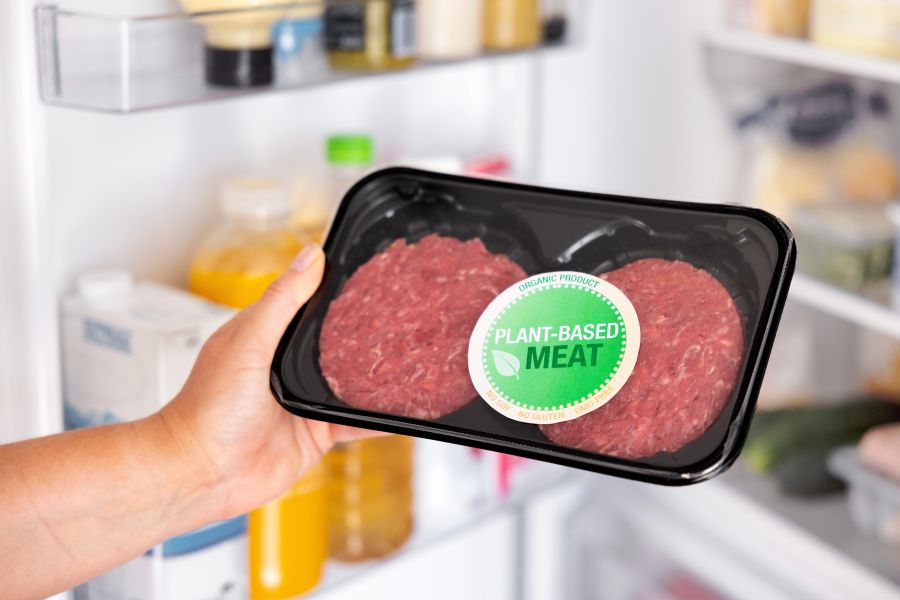 Plant-based food producers will remain impacted by regulatory uncertainty until at least 2027.The absence of comprehensive impact assessment data likely complicated trilogue negotiations, particularly around single market implications. A legal impact assessment would be crucial “to understand the consequences across different languages, regions, and products,” he says.
Translation troubles
Translation challenges raise additional complex legal questions. “The most talked about case involved the word ‘steak’ that in languages such as Spanish (filete) or Portuguese (bife) can also be used for tuna steak,” Pinto explains. “As proposed, the texts would also apply to fish.”
Further complications arise with traditional products and mixed formulations. “Bean burgers or soy sausages have been around for a long time in some countries and can be considered traditional,” he notes.
“Another issue arises with mixed products that contain both animal meat and other plant proteins. We expect many more issues to arise, especially with such a large list of possibly banned terms.”
The European Vegetarian Union statement warned the proposal could lead to court cases and enforcement inconsistencies based on product names, composition, production origin, and single market fragmentation.
Manufacturers advised to engage policymakers
Food Ingredients First reported in November that the measure created strategic dilemmas for plant-based manufacturers caught between investing in costly rebranding or waiting for legislative clarity. That uncertainty now extends at least 18 months, with Cyprus inheriting a politically fractured file when it assumes the rotating EU Council presidency in the first half of 2026.
For manufacturers navigating this extended timeline, Pinto offers clear guidance. “The first thing we encourage manufacturers to do is reach out to their policymakers with data, and arguments on how a ban could affect them, the market and EU competitiveness,” he says. “Then, although this was a timely win, the discussion is far from over, and the likelihood of a ban is still high, so companies should be ready for all scenarios.”
Cyprus will inherit a politically divisive issue that major agricultural powers have failed to resolve. The country’s presidency sets the agenda and chairs negotiations, but its limited livestock sector compared to France or Germany may mean the issue will be deprioritized in favor of issues where consensus appears achievable.
The sector represents Europe’s largest market for meat alternatives globally, with growth projections from US$108 billion in 2025 to nearly US$590 billion by 2035, according to ProVeg International data.
The statement said the campaign welcomes the postponement and hopes an impact assessment will be called by legislators, adding that the coalition will “keep working to bring facts, data, and common sense to the upcoming negotiations.”
Jessica van Leeuwen, EPP MEP from the Netherlands’ Farmer-Citizen Movement, who backed the measure, previously said that restrictions “will ensure the craftsmanship of our farmers and butchers is properly valued.” Whether that argument prevails in eventual negotiations depends substantially on Cyprus’ priorities and council dynamics in 2026.