EU food policy: What needs to change to build a healthier, more sustainable food system


Key takeaways
- EU food policy could accelerate the shift toward healthier, more sustainable, and more resilient food systems.
- Public procurement, fiscal measures, agricultural support, and processing infrastructure are highlighted as key areas for action.
- Greater coordination across the food system could create new opportunities for businesses while making healthier food choices more accessible.

More than 90 organizations from across the food system have come together to call for stronger EU action to build a healthier, more sustainable, and more just food system. The new EU Policy Action Brief combines perspectives from farmers, businesses, public health organizations, cities, and consumer groups, identifying shared priorities for policy change.
ProVeg International is among those contributing to this collaborative effort, which draws on the scientific framework of the EAT-Lancet Commission and sets out six areas where EU policy can help accelerate progress — from sustainable production and healthier consumption to public procurement, food waste, research, and trade.
We speak to Lucia Hortelano, senior EU policy manager, ProVeg International, about the significance of the initiative, the policy changes needed to transform Europe’s food system, and why coordinated action across the food system is essential to making that change happen.
Her comments describe what the Action Brief itself sets out and ProVeg International’s view as a participant.
What specific policy changes should the EU introduce first, and what would those changes mean for F&B businesses?
Hortelano: The Action Brief’s headline call is for an overarching EU Action Plan for a healthy, sustainable, resilient, and just EU food system, with clear ownership across the Commission’s Directorates-General, integrated objectives, voluntary targets to track progress, and budget tied to production, consumption, processing, and food loss reduction. That is a mandate-length project, and the brief frames it as building on preparatory work. This is something ProVeg has been calling for with a bigger NGO coalition since the start of the mandate. What the brief’s work is more immediately useful for is the files already in negotiation. Public procurement is the one the communities converged on most strongly, and it now coincides with the Commission’s proposal of September 9, 2026 for a new Public Procurement Act. The brief asks for procurement criteria based on Planetary Health Diet principles, kept flexible enough to work across different national and local contexts.
On tax, the brief asks for EU guidance to align fiscal incentives, including lower or zero VAT on healthy products such as fruit, vegetables, legumes, whole grains, pulses, and nuts, and equal VAT treatment between plant-based alternatives and their animal-based counterparts. For F&B businesses, the practical effect the brief describes is predictable long-term demand, a level playing field across the Single Market, and the removal of price distortions that currently hold back scaling and reformulation.
 ProVeg International says success would mean increased European plant protein production and consumption, guided by EU targets and Planetary Health Diet principles.
Where is there genuine consensus between farmers, manufacturers, retailers, foodservice, and consumer groups, and where do you still expect tensions?
Hortelano: Public procurement is the clearest point of agreement. It is the only policy unlock in the brief identified by all six Communities for Action: farmers, consumers, public health actors, retailers and manufacturers, cities, and food services. The brief is explicit that this is where the greatest policy momentum exists. There is also convergence on cross-value-chain collaboration, on support for farmers moving into more diverse crop rotations, and on reducing food loss and waste along the chain. The work of the brief does not paper over the disagreements, and the conveners deserve credit for that.
Rather than producing a lowest common denominator text, they built in an “areas for further dialogue” section under each policy package, which sets out openly where the communities have not yet aligned. Those include whether front-of-pack labeling should be voluntary or mandatory, how far advertising restrictions on foods high in fat, sugar, and salt should go, and whether reformulation targets should be binding or incentive-based. Getting organizations to record their disagreements in a shared document, rather than walk away from it, is the harder part of this kind of process.
The brief calls for greater fiscal and economic support for the transition. What incentives or financial mechanisms would make the biggest difference to businesses, particularly for SMEs?
Hortelano: The brief puts fiscal measures first. Aligning VAT so that plant-based alternatives are not taxed above their animal-based counterparts, and reducing or removing VAT on fruit, vegetables, legumes, nuts, and other fiber-rich foods, is the fastest available lever because it requires no new EU instrument. The Food Services community specifically called for financing critical infrastructure in the midstream, closing gaps in processing capacity so that stronger value chains can form between producers and buyers. For regional SMEs, this is the difference between processing locally grown protein crops and importing the ingredient.
Third is agricultural support. The brief calls for CAP payments, agro-environmental funding, and de-risking mechanisms to reward ecosystem stewardship and support shifts toward more diverse, nutrient-dense crop rotations. The post-2027 CAP is in negotiation now, which makes this a live question rather than a distant one. For food businesses, the value is contracted to multi-year raw material supply. Fourth, the brief asks for co-financed research and innovation, with the Retail and Manufacturers community pointing to processing techniques and ingredient innovation to improve taste and health qualities. The administrative burden matters as much as the money, since it determines whether smaller firms can access the schemes at all.
How can changes to procurement rules translate into meaningful new opportunities for food manufacturers, suppliers, and foodservice operators?
Hortelano: As pointed out by the coalition’s work, integrating minimum voluntary or mandatory criteria based on Planetary Health Diet principles into EU procurement directives creates a reliable, large-scale market for sustainable plant-rich meals across public institutions. Institutional catering represents a multi-billion-euro market across the EU, offering foodservice operators and caterers stable, long-term contracts that de-risk portfolio shifts toward plant-based offerings.
Aggregated public demand allows food manufacturers and suppliers to scale production of legumes, whole grains, and alternative proteins, unlocking economies of scale that lower overall production costs. Procurement frameworks that prioritize seasonal, plant-rich, and locally sourced crops establish structured, multi-year supply partnerships between primary producers, regional processors, and foodservice providers.
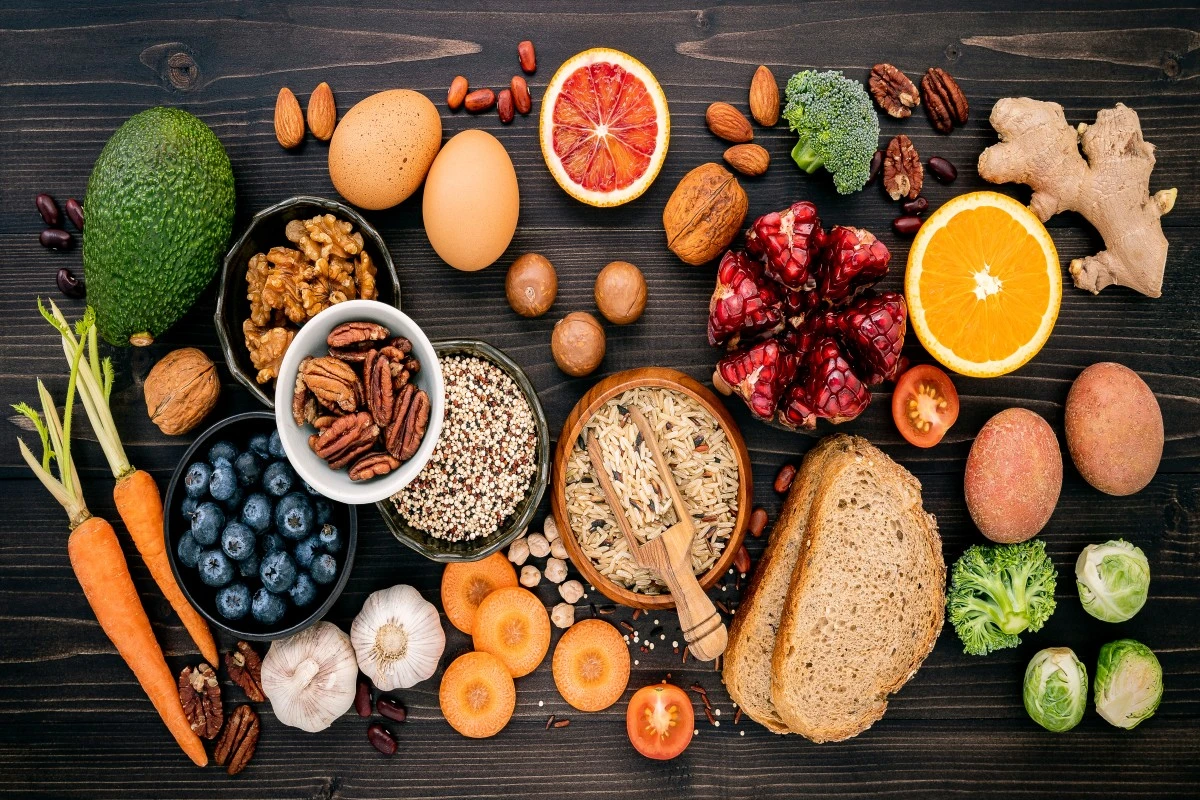
The brief says aligning VAT rates could make plant-based alternatives more affordable and support access to healthy, fiber-rich foods.
The brief calls for clearer rules around labeling, advertising, and consumer information. What changes are needed?
Hortelano: The brief asks for harmonized nutritional and environmental food labeling, and it is candid that this is unfinished business. Its own “areas for further dialogue” list the open questions: which labels, voluntary or mandatory, which calculation methods, and what can be learned from the Nutri-Score discussions. There is no Commission proposal on the table at present. Restrictions on advertising HFSS products to vulnerable groups, particularly children, must be standardized across physical and digital media platforms to ensure fair market conditions.
On complexity, the coalition’s working argument is that harmonization across the EU results in easier and more cost-effective alignment for the manufacturing and retail sector. Fragmentation is the cost driver. Where the EU does not act, member states legislate individually, and businesses end up managing a patchwork rather than a framework; this is something we are already experiencing at the member state level.
You argue that healthier and more sustainable food choices need to become more accessible and appealing. What do you see as the biggest barriers currently preventing businesses from scaling these products?
Hortelano: Unfavorable fiscal frameworks, including higher VAT rates on plant-based foods in several member states, create artificial price barriers for consumers and compress business margins. Processing capacity is the second. The brief describes gaps in midstream infrastructure that limit the availability and raise the cost of regionally sourced plant protein ingredients. Third is the debate around processing itself. The brief notes a concern that the ultra-processed narrative groups nutritionally distinct products together in a way that can discredit nutrient-rich processed and fortified foods. Fortification is how many of these products deliver iron, B12, calcium, and protein at accessible prices, and the brief flags that the debate is proceeding without a globally accepted definition for policy and regulatory purposes.
Lastly, protracted approval timelines under the EU Novel Food Regulation delay market entry for innovative alternative proteins, placing European businesses at a competitive disadvantage globally.
Where do you think policymakers should be directing investment now?
Hortelano: The brief’s research package asks for co-financed research and innovation to strengthen value chains for fruits, vegetables, legumes, whole grains, nuts, seeds, and sustainable plant and animal products. EU research funding through FP10, Horizon Europe, and Agri2040 must dedicate substantial capital to plant protein crop breeding, yield optimization, and climate resilience for human consumption. Targeted R&D funding should support midstream processing technology, texture, and flavor optimization, and side-stream valorization to make plant-based products more appealing and cost-effective.
Investment is needed in alternative protein technologies, including precision fermentation and novel cultivation methods, alongside streamlined regulatory testing protocols. Funding should back farmer-led demonstration sites, peer-to-peer knowledge sharing, and clinical nutrition research to strengthen the evidence base for plant-rich dietary shifts.
What would success look like five years after its introduction, and what measurable changes should businesses and consumers expect to see?
Hortelano: Success would mean a measurable increase in European plant protein production and consumption, guided by concrete EU protein targets and Planetary Health Diet principles. Businesses and consumers should see equalized VAT rates across all member states, making healthy, plant-rich foods and alternatives systematically affordable. Public institutions across Europe would consistently offer plant-rich meals, supported by established regional supply chains and multi-year farmer contracts. A modernized regulatory environment would deliver harmonized labeling, faster Novel Food approvals, reduced food waste, and a significant drop in diet-related disease burdens across the EU.



Upcoming webinars
Oat-Standing Ingredients - Showcasing Irish Grain Through Innovation
Tirlán Ingredients

2027 Food Safety Risks for Quality & Compliance Leaders
FoodChain ID

Formulating for function: Developing benefit-led beverages with natural colours, botanicals, and flavours
Givaudan Sense Colour