



EU Seafood Vision 2040 faces industry calls for aquaculture targets and fisheries reform

Key takeaways
- The EU’s Vision 2040 aims to strengthen seafood supply, aquaculture investment, and digital traceability.
- Industry groups demand binding aquaculture growth targets, faster licensing, and fisheries policy reform.
- Environmental groups and small-scale fishers favor stronger enforcement of existing rules and targeted funding.
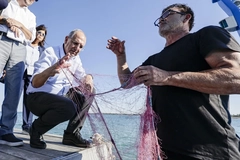 (Image credit: European Commission).
The European Commission has unveiled its Vision 2040 for fisheries and aquaculture, setting out plans to strengthen Europe’s seafood supply through aquaculture legislation, digital traceability, and investment in cleaner production. Industry groups have welcomed parts of the strategy but questioned whether it goes far enough to unlock growth and address pressures on producers.
Presented on October 20, the commission’s strategy covers the aquatic food value chain, linking production and environmental protection with demand for EU seafood. It aims to give businesses greater certainty to invest while safeguarding the resources on which the sector depends.
The Federation of European Aquaculture Producers (FEAP) generally supports the direction but wants binding production targets and faster farm licensing. Fishing industry and labor organizations have taken a sharper position, criticizing the absence of a commitment to revise the Common Fisheries Policy (CFP).

Environmental groups and small-scale fishers, meanwhile, welcome the emphasis on implementing existing rules, exposing a disagreement over how Europe should secure its seafood industry’s future.
Calls for measurable aquaculture growth
FEAP welcomes plans for a legislative proposal by the end of 2027 to create a clearer, more coherent aquaculture regulatory framework.
The federation says the proposal’s value will depend on whether it binds member states and shortens licensing procedures in practice.
“Our members will judge the vision by how long it takes to license a new farm,” says Anna Pyć, FEAP president, who puts current waiting times at five to eight years.
However, FEAP says the strategy lacks an EU production target for 2040, national contributions, and interim milestones. It calls for a binding finfish production target to give governments and investors a clearer basis for decisions.
Fishing groups demand policy reform
A joint response from Europêche, Copa-Cogeca, EFFAT, and the European Transport Workers’ Federation argues that better implementation cannot substitute for changes to the underlying fisheries framework.
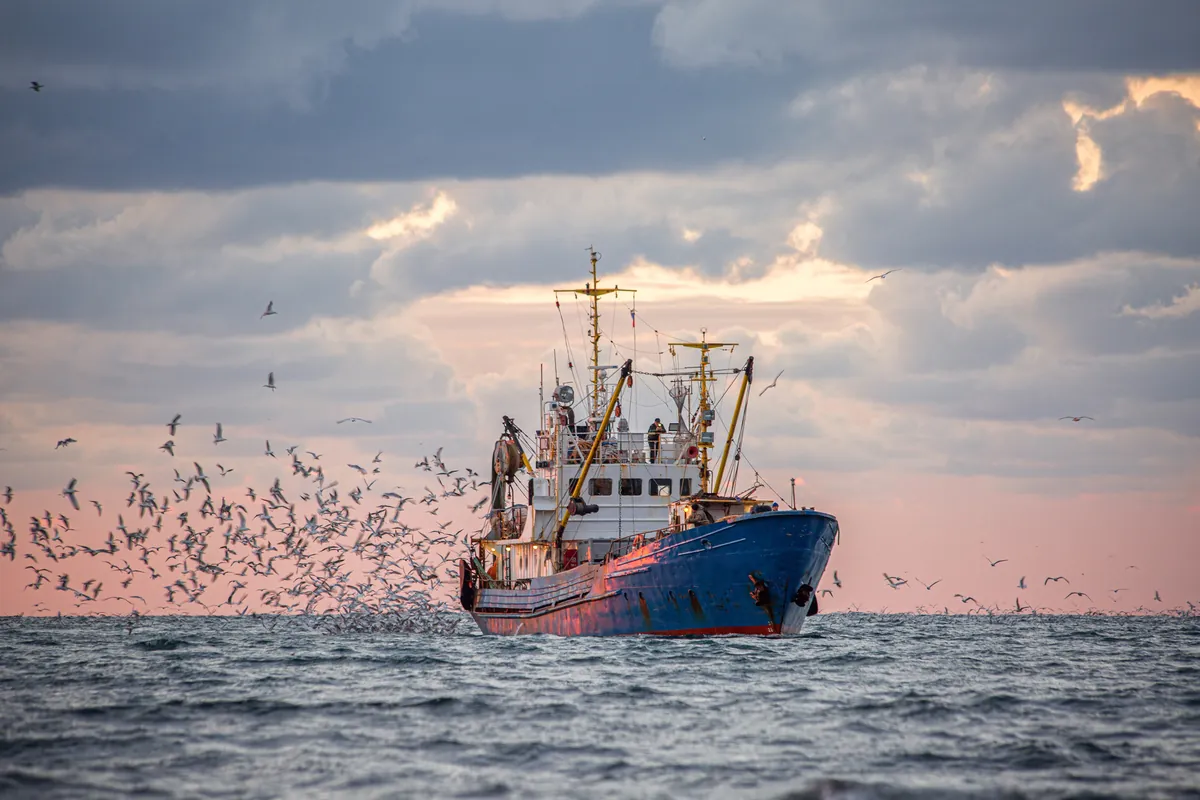 The commission wants to fight illegal fishing and protect the European seafood value chain from unfair competition.“A vision without CFP revision is a dead letter and, without concrete measures, an empty gesture,” says Javier Garat, president of Europêche.
The organizations call for targeted reform to enable fleet renewal, attract investment, reduce administrative burdens, and improve the appeal of fishing careers. They argue that policy must respond to changes since the last comprehensive reform in 2013, including Brexit, climate change, and energy pressures.
The groups welcome the planned aquaculture proposal but say it must deliver practical simplification and predictable investment conditions.
They also criticize the lack of a firm commitment to extend mandatory consumer information to prepared and preserved seafood, a longstanding sector request.
Traceability and supply resilience
For seafood businesses, the commission’s plans reach beyond farms and fishing vessels. The strategy promotes digital traceability for all products across the supply chain by 2029, aiming to strengthen transparency, consumer trust, and market value.
Its energy agenda prioritizes efficiency, skills, and available clean fuels through 2030, followed by scaling low- and zero-emission technologies. Financing plans include a proposed minimum €2 billion (US$2.2 billion) allocation for core fisheries policy functions in the EU’s 2028–2034 budget.
The commission also intends to strengthen international cooperation and action against illegal fishing while protecting the European seafood value chain from unfair competition. These measures remain part of a policy roadmap rather than newly enacted requirements.
Small-scale fishers favor implementation
Seas At Risk and Low Impact Fishers of Europe welcome recognition of small-scale fishing, generational renewal, and ecosystem-based management.
However, they say delivery requires adequate financing and full implementation of existing EU fisheries law. The organizations warn that budget proposals risk favoring industrial fishing interests over low-impact fishers and coastal communities.
Their position on CFP reform contrasts directly with Europêche’s — they argue that reopening the policy could weaken environmental safeguards and create further uncertainty.
Oceana’s response similarly supports stronger implementation and seafood transparency. However, it criticizes the absence of explicit reinforcement of EU marine protection targets and commitments to phase out bottom trawling in marine protected areas.
The planned aquaculture proposal now offers an early test of delivery. Producers want shorter licensing procedures and measurable expansion, while the wider fisheries debate remains divided over whether existing rules need stronger enforcement or legislative change.