


Delays expected on US GMO labeling rules


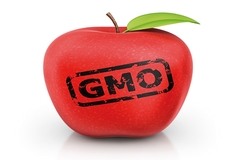
02 May 2018 --- The US Department of Agriculture says it does not expect to meet the July deadline to create a new rule for genetically modified foods and ingredients, a landmark biotechnology labeling law passed in 2016 under the Obama administration.
US Agriculture Secretary Sonny Perdue has told the National Association of Farm Broadcasting, that “we’re not as close as I’d like” to publishing a final rule.
Passed by Congress two years ago, the “National Bioengineered Food Disclosure Standard” charges the USDA to establish a national mandatory bioengineering food disclosure standard within two years, with certain provisions.
But despite the bill, Perdue’s comments reveal that meeting the July 29, 2018, deadline for when the new GMO labeling rules should be coming into effect, looks highly unlikely.
Mandatory labeling of GMO food is done in at least 64 countries, including most European countries, China, Russia, Japan, Brazil, South Africa, and Australia.
“I had insisted last year when I got here that we would meet that deadline,” said Perdue. “I’m still hoping for completion this summer, but it does not look like we will meet the deadline that we had insisted upon.”
And the Agriculture Secretary blames the delays on the White House Office of Management & Budget (OMB) which has to review the GMO labeling rules. He says that the USDA is dependent on the OMB and has struggled to receive a timely input from the department.
GMO labeling has been a thorny issue in the US for quite some time. Food campaigners advocate that putting labels on food containing GMO ingredients is a “right-to-know” issue.
The new GMO labeling rules – once they have actually been created and put into effect – will provide new opportunities for consumers to have access to information about their food. Proponents call for comprehensive labeling that applies nationwide instead of a “patchwork” state-by-state approach.
All content and features on this website are copyrighted with all rights reserved. The full details can be found in our privacy statement




Upcoming webinars
Oat-Standing Ingredients - Showcasing Irish Grain Through Innovation
Tirlán Ingredients
Register now

2027 Food Safety Risks for Quality & Compliance Leaders
FoodChain ID
Register now

Formulating for function: Developing benefit-led beverages with natural colours, botanicals, and flavours
Givaudan Sense Colour
Register now